
Singapore Trip Essentials 2026: Weather, Power & Packing
Updated: 2026-08-25
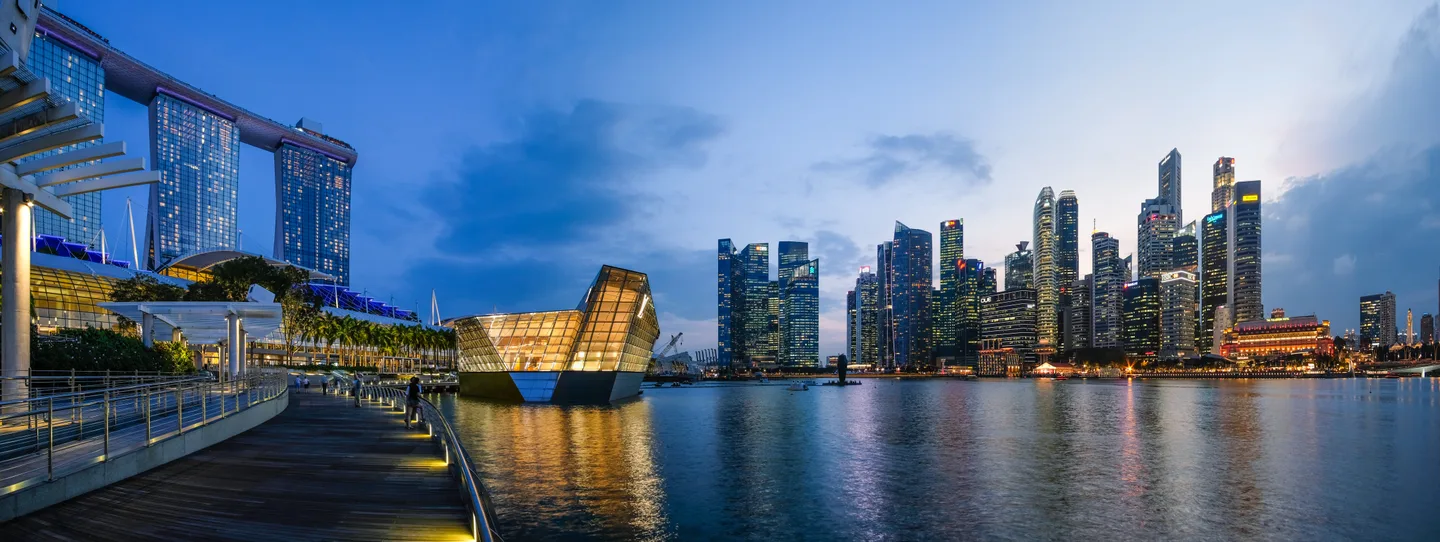
Singapore's temperature sits between roughly 23°C and 33°C year-round with mean humidity around 82%, so light breathable clothes work in any month, plus a layer for aggressive air conditioning (checked 16 August 2026).
The Climate, and What It Actually Means for Your Bag
Singapore sits just north of the equator, so the year varies by rainfall pattern rather than by temperature. The official long-term figures make the point clearly.
| Measure | Figure |
|---|---|
| Typical daily minimum | 23–25°C |
| Typical daily maximum | 31–33°C |
| Warmest month (24-hour mean) | May, 28.6°C |
| Coolest months (24-hour mean) | December and January, 26.8°C |
| Mean annual relative humidity | ~82% |
| Mean annual rainfall (1991–2020) | 2,113.3 mm across about 171 rain days |
| Northeast monsoon | December to early March |
| Southwest monsoon | June to September |
The practical consequences:
- A 2°C annual swing means one wardrobe. Don't plan seasonal outfits; plan for one hot, humid day repeated.
- Rain comes in short heavy bursts, not all-day drizzle. A compact umbrella beats a rain jacket, which is unbearable in this humidity.
- Bring more shirts than days if you can. Most visitors change once mid-day. Quick-dry fabrics matter more here than anywhere else in the region.
- Indoor air conditioning is the real temperature problem. A light cardigan or long-sleeve shirt is the most-used item most visitors pack.
Power, Water and Getting Online
Three infrastructure questions cover most of what travellers worry about, and all three have short answers.
| Item | Singapore standard | What to bring |
|---|---|---|
| Electricity | 230V, 50Hz, Type G (UK three-pin, 13A) | Type G adapter; no transformer needed for modern electronics |
| Tap water | Safe to drink directly from the tap | A reusable bottle — not bottled water |
| Mobile data | Widely available; eSIM-capable networks | An eSIM sorted before departure, or an airport SIM |
| Payments | Cards and contactless accepted almost everywhere | One card is enough; hawker centres increasingly take QR and card |
PUB, Singapore's national water agency, states that tap water is within the Food Safety and Security (Non-Packaged Drinking Water) Regulations 2025 and WHO Guidelines and is suitable for drinking directly without further filtration. Refill stations are common in malls and parks, and skipping bottled water is an easy way to cut daily spend in an expensive city.
Singapore's Type G socket matches the UK, Malaysia, Hong Kong and Brunei, so travellers from those places need nothing. Everyone else needs an adapter — regional specifics are in our Asia power plugs guide.
What Singapore Won't Let You Bring
Singapore's import rules are stricter than most travellers expect, and enforcement is real. Singapore Customs lists these among prohibited items:
- Chewing gum — except oral dental and medicated gum approved by the Health Sciences Authority.
- Electronic cigarettes and vaporisers, including devices containing nicotine solutions.
- Chewing tobacco, shisha, and nasal or oral snuff.
- Controlled drugs and psychotropic substances, firecrackers, endangered wildlife products, obscene and seditious materials, counterfeit publications and software.
Controlled goods — including certain pharmaceuticals, meat, seafood and weapons — require an import permit and must be declared at the Red Channel on arrival. If you take prescription medication, carry it in its original packaging with a copy of the prescription; the Health Sciences Authority is the relevant authority for pharmaceuticals.
A few habits that keep the trip friction-free:
- Declare rather than guess. The Red Channel costs you five minutes; the alternative is considerably more expensive.
- Eating and drinking on the MRT is prohibited, including water. This one catches almost every first-time visitor.
- Smoking is banned in most public areas, with designated yellow-box smoking zones outside many buildings.
Customs rules and regulations described here are current as of August 2026 and can change. Confirm with Singapore Customs and the Immigration & Checkpoints Authority before you travel.
The Short Packing List
Everything below assumes a city trip of a week or less, with laundry available or unnecessary.
- Clothes: light breathable tops (one per day if you can), two pairs of light trousers or shorts, one long-sleeve layer for air conditioning, swimwear, sandals plus one comfortable walking shoe.
- Modest option: shoulders and knees covered for temple and mosque visits — a light scarf handles most of it.
- Bag: a small daypack that can take an umbrella, a water bottle and a layer.
- Health: sunscreen, insect repellent, any prescription medication in original packaging.
- Tech: Type G adapter, power bank (cabin only, never in hold luggage), charging cables.
- Leave at home: heavy jackets, bottled water, a hairdryer (hotels have them), and anything on the prohibited list above.
One Thing Worth Sorting Before You Land
Singapore rewards travellers who arrive already connected. Changi-to-city transport, walking directions between MRT exits and contactless payment all assume a working data connection, and the airport SIM counter is a queue you don't need to join.
A regional or global data eSIM installed before departure activates the moment you land — useful in a city where a wrong MRT exit costs fifteen minutes. If you're still deciding between an eSIM and a rental hotspot, our eSIM vs pocket WiFi comparison lays out the trade-offs. Current pricing for the data eSIM is in the card below.
Compare prices for related tickets


FAQ
Can you drink tap water in Singapore?
Yes, directly from the tap with no filtering or boiling. PUB states that Singapore's tap water meets the Food Safety and Security (Non-Packaged Drinking Water) Regulations 2025 and WHO Guidelines, and refill points are common in malls and parks.
What plug adapter do I need for Singapore?
Type G — the UK-style three-pin plug, on 230V and 50Hz. Travellers from the UK, Malaysia, Hong Kong and Brunei need nothing; everyone else needs an adapter, though modern phone and laptop chargers handle 230V without a transformer.
When is the best time to visit Singapore weather-wise?
There is no meaningfully better or worse month temperature-wise — the 24-hour mean ranges only from 26.8°C in December and January to 28.6°C in May. February to April tends to be marginally drier, but rainfall occurs year-round across roughly 171 days annually.
Is chewing gum really illegal in Singapore?
Bringing it in is prohibited, with an exception for oral dental and medicated gum approved by the Health Sciences Authority. It sits on Singapore Customs' prohibited goods list alongside e-cigarettes, vaporisers and smokeless tobacco products.
How cold does the air conditioning really get indoors?
Cold enough that a long-sleeve layer is the most-used item in most visitors' bags. Malls, cinemas, the MRT and many restaurants run far cooler than the 31–33°C outside, and the contrast is sharper than in most tropical destinations.