
Asia Power Plugs & Voltage: All 10 Countries in One Table
Updated: 2026-08-25
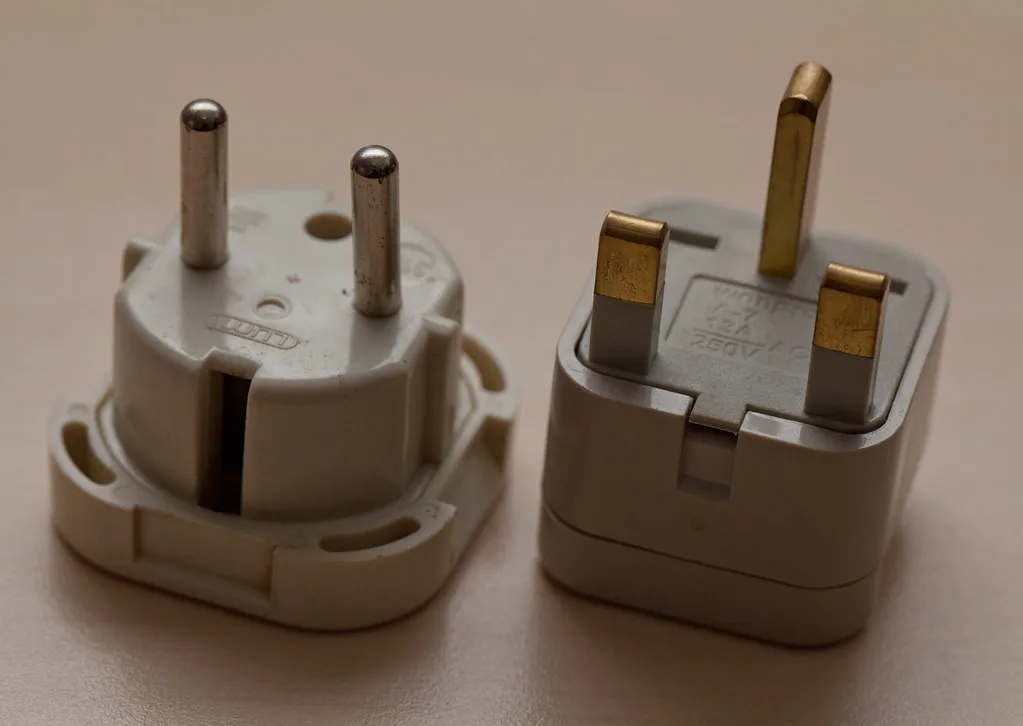
Most of Asia uses one of three plug types — A/B in Japan and Taiwan, Type G in Hong Kong, Macau, Singapore and Malaysia, and hybrid A/B/C elsewhere — with Japan and Taiwan running lower voltage than the rest of the region. A single universal adapter covers all ten countries.
Asia power plugs at a glance: all 10 countries
This is the whole region in one view. Voltage is the standard nominal value; frequency almost never matters for chargers. The last three columns tell you what happens when you bring a device built for Korea (Type C/F, 220V), the US (Type A/B, 120V) or the EU (Type C/F, 230V).
| Country | Plug type(s) | Voltage | Frequency | Korean devices OK? | US devices OK? | EU devices OK? |
|---|---|---|---|---|---|---|
| South Korea | C / F | 220 V | 60 Hz | Home | Adapter + converter | Fits |
| Japan | A | 100 V | 50/60 Hz | Adapter + converter | Fits | Adapter + converter |
| Taiwan | A / B | 110 V | 60 Hz | Adapter + converter | Fits | Adapter + converter |
| Hong Kong | G | 220 V | 50 Hz | Adapter | Adapter + converter | Adapter |
| Macau | G | 220 V | 50 Hz | Adapter | Adapter + converter | Adapter |
| Singapore | G | 230 V | 50 Hz | Adapter | Adapter + converter | Adapter |
| Thailand | A / B / C | 220 V | 50 Hz | Fits | Fits + converter | Fits |
| Vietnam | A / C | 220 V | 50 Hz | Fits | Fits + converter | Fits |
| Malaysia | G | 240 V | 50 Hz | Adapter | Adapter + converter | Adapter |
| Philippines | A / B / C | 220 V | 60 Hz | Fits | Fits + converter | Fits |
How to read the last three columns:
- Fits — your plug physically goes in and the voltage is compatible; nothing extra needed.
- Adapter — you only need a plug-shape adapter. Voltage is fine for multi-voltage electronics (phone, laptop and camera chargers, which almost all read
INPUT 100-240V). - + converter — also pack a voltage converter *only if* you bring a single-voltage, high-power item (hair dryer, some hair stylers, travel kettle). Multi-voltage gadgets never need it.
Voltage note: Korea, Hong Kong, Macau, Thailand, Vietnam and the Philippines are often listed at a harmonised 230V under the IEC standard; the nominal local figures above (220V) sit inside the same 220-240V band, so any device rated for that range works across all of them. Only Japan (100V) and Taiwan (110V) are genuinely low-voltage.
The 3 plug families you'll meet in Asia
Type A / B (flat blades). The North American / Japanese standard: two flat parallel pins (Type A), or the same plus a round earth pin (Type B). You will find it in Japan and Taiwan, and US travellers plug straight in.
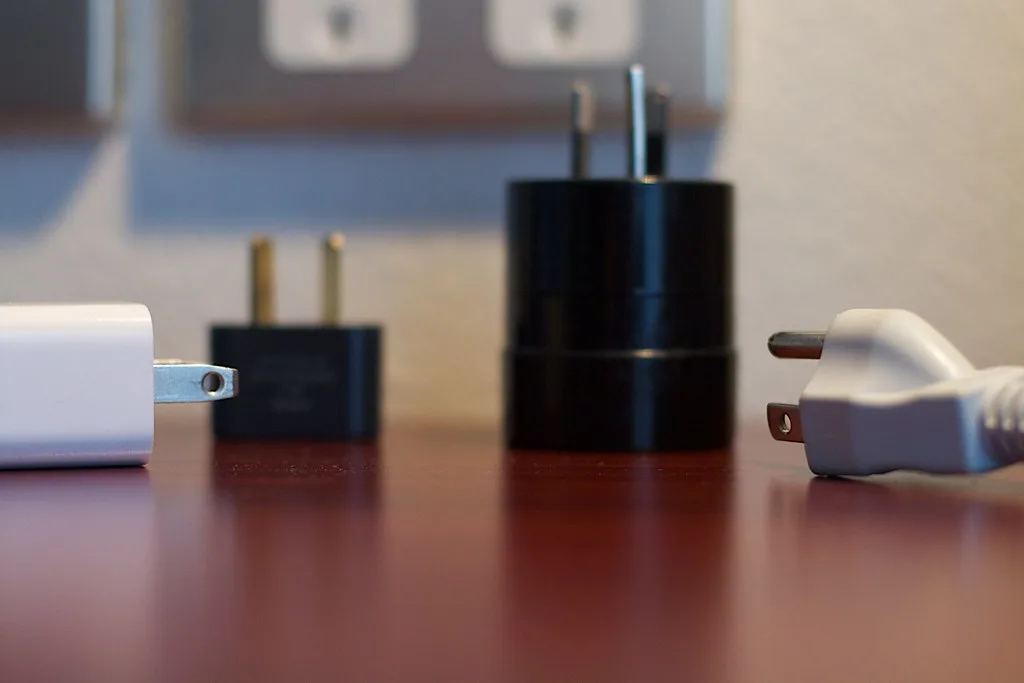
Type G (three rectangular pins). The British standard, kept by former UK-linked economies: Hong Kong, Macau, Singapore and Malaysia. It is bulky and unmistakable, and nothing else fits it, so a Type G adapter is non-negotiable for these four.
Type C / F and hybrid sockets. Korea uses the round-pin Type C/F (Europlug-compatible), so EU devices drop straight in there. Thailand, Vietnam and the Philippines run *hybrid* sockets that accept the flat A/B and round C plugs alike, which is why a Korean (Type C) or US (Type A) charger usually needs no adapter in those three. Thailand also has its own grounded Type O, but the hybrid outlets sold everywhere still take A/B/C, so travellers rarely meet a bare Type O socket.
Voltage: what actually burns your device
Plug shape decides whether a device *fits*; voltage decides whether it *survives*. The dangerous direction is bringing a low-voltage device into a high-voltage country. A single-voltage 120V US hair dryer pushed into a 220-240V socket in Hong Kong, Thailand or Singapore can overheat or fail. That is the one mistake that actually damages hardware.
The reverse (a 220V Korean device in 100V Japan) is safer: it usually just underperforms rather than breaking. Either way, the fix is the same, and it is on the label. If your charger or appliance reads INPUT 100-240V, 50/60Hz, it is multi-voltage and handles every country in the table with only a plug adapter. If it names a single figure (120V or 220V), it needs a voltage converter for the mismatched countries. Frequency (50Hz vs 60Hz) is irrelevant for phone and laptop chargers; it only nudges a few motor- or clock-driven appliances.
*General information only. Always check your specific device's rating plate before you travel.*
What to pack: universal adapter vs country-specific
For a single-country trip, a cheap country-specific adapter is enough. But if your route crosses the region, say Seoul to Tokyo to Bangkok, a universal adapter that carries A, C, G and I pins in one body is the simplest answer: it covers all ten countries here without you sorting plugs mid-trip.
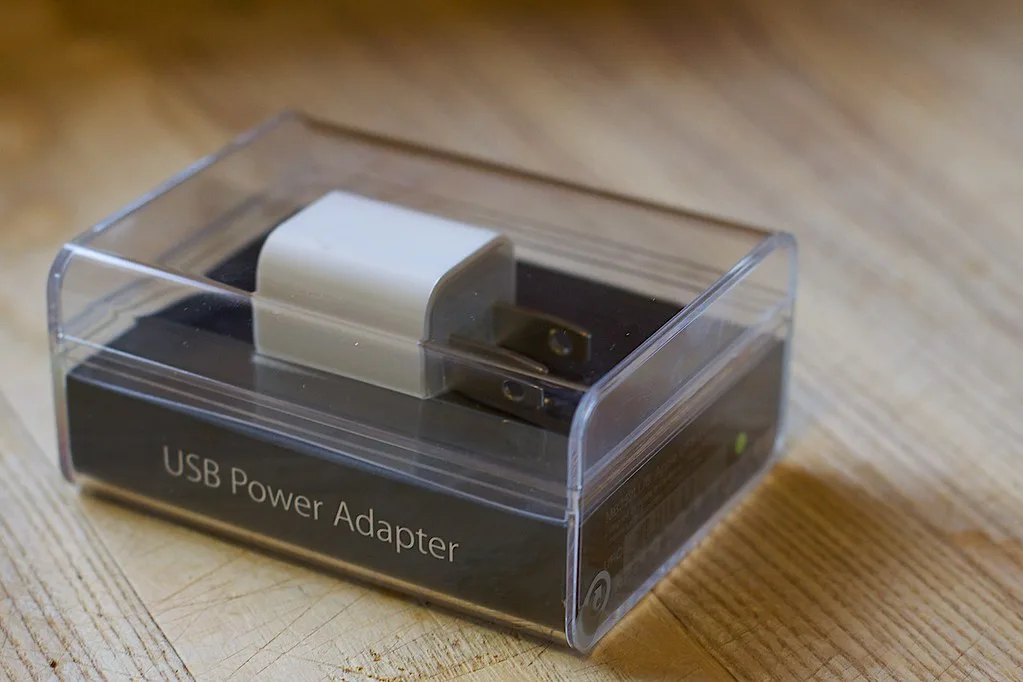
Two practical upgrades. A multi-port USB / GaN charger lets one adapter feed your phone, laptop and earbuds at once, and these are virtually all multi-voltage. And bring enough cables for everyone travelling. Most mid-range and up hotels across these markets now build USB or USB-C ports into the desk or bedside, so a couple can often get by with a single adapter plus their own cables. The one thing you cannot count on a hotel lending is a *voltage converter*: if you genuinely need one, pack it yourself.
Sort your data before you sort your plugs
A universal adapter keeps your devices charged; an eSIM keeps them online the moment you land, with no SIM swap and no airport queue. Install it before departure and data is live on arrival. Starting prices below are from our tracked data (July 2026); compare live platform rates on each product page.
- Japan - Japan Unlimited Data eSIM (
JP-ESIM-0001) - Taiwan - Taiwan Unlimited Data eSIM (
TW-ESIM-0001) - Thailand - Thailand 5G eSIM with Unlimited Data / AIS (
TH-ESIM-0001) - Hong Kong - Hong Kong eSIM, 3-30 days, up to 60GB (
HK-ESIM-X0001) - Region-wide - Global Data eSIM 1GB-30GB, one plan across Singapore and beyond (
SG-ESIM-X0001)
Compare prices for related tickets


FAQ
Do I need a voltage converter in Japan?
Almost certainly not for your electronics. Japan runs at 100V, and phone, laptop and camera chargers are nearly all multi-voltage (INPUT 100-240V), so they charge normally with just a Type A plug adapter. You would only need a converter for a single-voltage 220V device such as a Korean or European hair dryer, and even then a dual-voltage travel dryer is lighter than a converter.
Is the plug the same in Singapore and Hong Kong?
Yes. Singapore, Hong Kong, Macau and Malaysia all use the British Type G plug with three rectangular pins. One Type G adapter (or a universal adapter) covers all four. Voltage sits in the 220-240V band across them, so multi-voltage devices need only the adapter.
Will my Korean charger work in Taiwan?
Physically it needs a Type A/B adapter, because Taiwan uses flat-blade sockets while Korea uses round Type C/F. Electrically, a multi-voltage Korean charger (100-240V) works fine even though Taiwan is 110V. A single-voltage 220V Korean appliance would underperform and needs a converter.
Can I just use USB-C everywhere instead of adapters?
Only where there is a USB port to plug into. Many newer hotels across these ten countries have built-in USB or USB-C at the desk or bedside, and a power bank covers the gaps. But wall sockets still differ by country, so to charge from the wall you need the right plug adapter. USB-C solves the cable, not the socket.
Which single adapter covers all 10 countries?
A universal travel adapter that includes Type A, C and G pins covers every country in the table: Type A/B for Japan and Taiwan, Type G for Hong Kong, Macau, Singapore and Malaysia, and Type A/C for Korea, Thailand, Vietnam and the Philippines. Pair it with a multi-voltage USB charger and you are set region-wide.
Sources
More guides
- Plan & Pack · 2026-09-15Taiwan Packing Checklist 2026: EasyCard, Cash & eSIM
- Plan & Pack · 2026-09-15Japan Plugs & Voltage 2026: Do Americans Need an Adapter?
- Plan & Pack · 2026-09-08Korea Packing Checklist 2026: T-money, eSIM, K-ETA Waiver
- Plan & Pack · 2026-09-08Japan Packing Checklist 2026: Cash, IC Cards, Power Banks