
Japan eSIM vs Pocket Wi-Fi vs Roaming 2026: Which to Pick
By Alvin LimPublished Updated
views 1AI reads 48
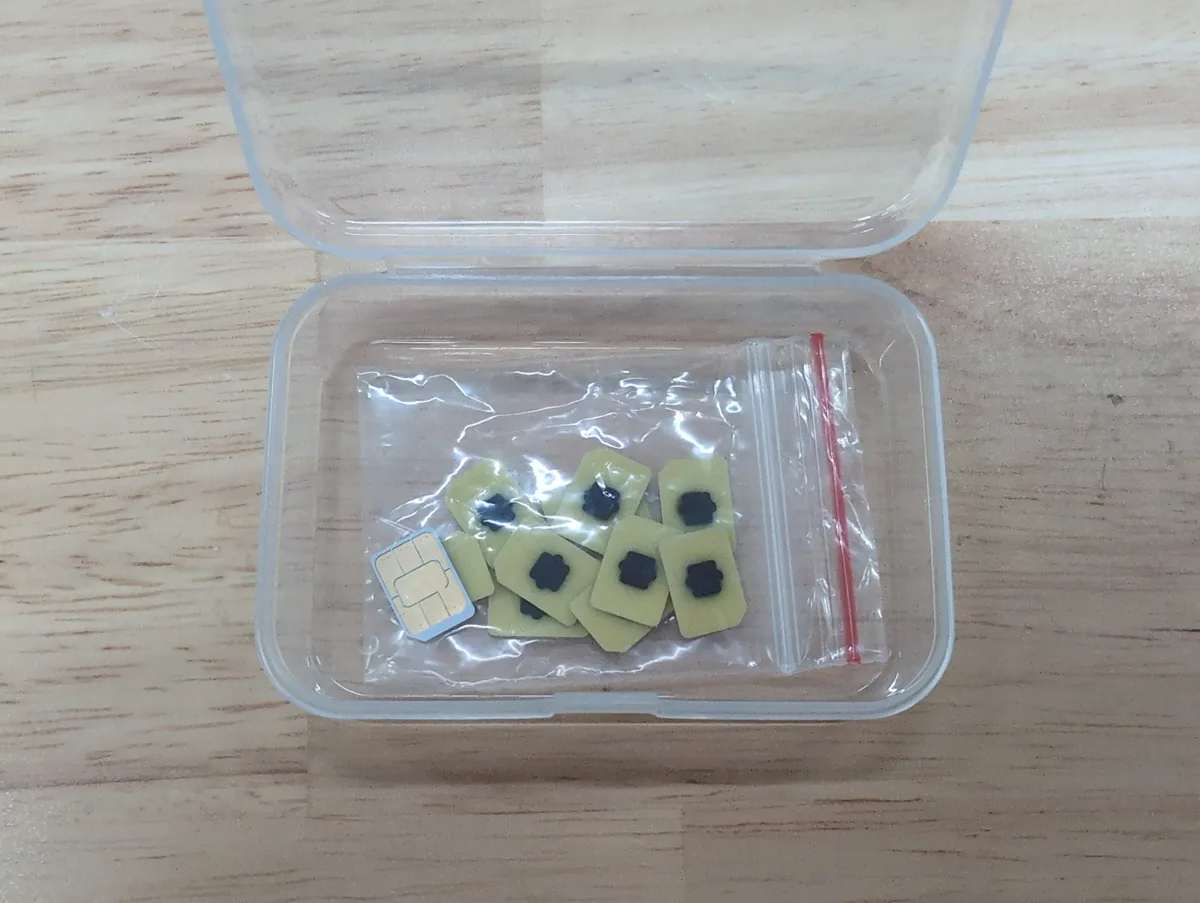
As of October 2026, a travel eSIM is the easiest way online in Japan if your phone supports eSIM and is not carrier-locked, a pocket Wi-Fi suits groups or older phones, and home roaming needs little or no setup but is charged by the day (US$12 per day on AT&T and Verizon). Korean and Taiwanese carriers sell cheaper packs, such as SK Telecom baro 3GB at ₩29,000 for up to 30 days (≈ US$22 at the 30 Oct 2026 rate).
Which is best for Japan: eSIM, pocket Wi-Fi or roaming?
For most solo travelers with an unlocked eSIM phone, a travel eSIM is the simplest pick; a pocket Wi-Fi wins for groups sharing one connection, and home roaming wins when you need your own number with zero setup.
| Travel eSIM | Pocket Wi-Fi rental | Home-carrier roaming | |
|---|---|---|---|
| How it works | Data plan downloaded to your phone by QR code or app | Battery-powered router you carry; phones join it over Wi-Fi | Your own SIM keeps working on a Japanese partner network |
| Phone needs | eSIM support + no carrier lock | Any Wi-Fi device | Roaming enabled by your carrier |
| Devices covered | 1 phone (more via hotspot, if the plan allows) | Several phones, tablets, laptops | 1 phone per plan |
| Your home number | Stays active alongside the eSIM | Unaffected | Stays active |
| Setup | Install before you fly, switch data line on landing | Collect at an airport counter or your hotel; return by post | Usually automatic or one opt-in |
| Cost basis | One price per trip (data amount + days) | Price per calendar day | Per day (US$12/day on AT&T and Verizon) or a trip pack |
| Watch out for | Locked phones; plan start rules | Battery life, carrying it, return deadline | Daily fees adding up on long trips |
| Best for | Solo travelers, couples with eSIM phones | Families, groups, older or locked phones | Short trips, travelers who must stay on one number |
- The eSIM listed on alvin.travel uses Japan's Rakuten, KDDI (au) and Docomo networks; Rakuten's own partner areas run on au.
- A physical prepaid SIM is a fourth option: JNTO's rough guide is about ¥3,000 (≈ US$19 at the 30 Oct 2026 rate) for 1GB over 30 days, sold at major airports and at Bic Camera or Yodobashi Camera.
Will a travel eSIM work on my phone?
A travel eSIM works only if your phone supports eSIM and is not locked to your home carrier, so check both before you buy.
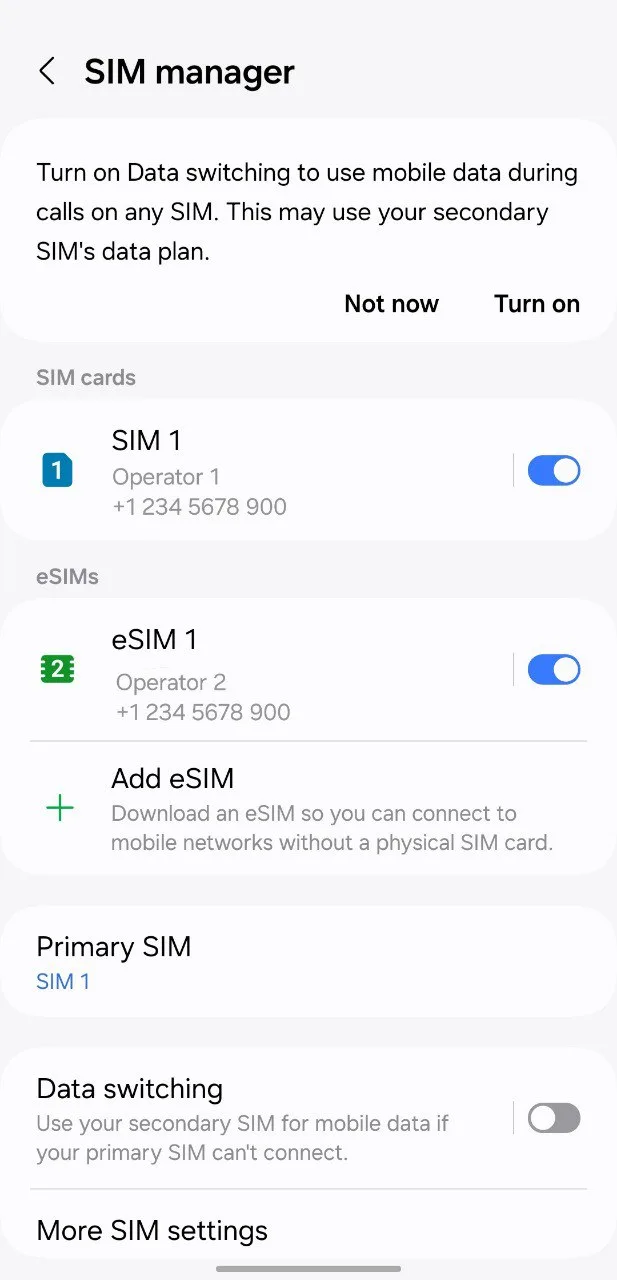
| Check | iPhone | Google Pixel |
|---|---|---|
| eSIM support | iPhone XS, XS Max, XR or later | Pixel 3a or later (eSIM + physical SIM) |
| Carrier lock | Settings > General > About > Carrier Lock must say "No SIM Restrictions" | Ask your carrier whether eSIM and dual SIM work on your phone |
| Two lines at once | Two active eSIMs on supported models | Two eSIM profiles on Pixel 7 or later, if the carrier allows |
| Where to add it | QR code or the provider's app | Settings > Network & internet > SIMs > Add SIM > Set up an eSIM |
- Some phones are eSIM-only: Google says US Pixel 10 models (except the Pixel 10 Pro Fold) cannot take a physical SIM.
- Locked or too old for eSIM? Go straight to pocket Wi-Fi or roaming; JNTO notes a local SIM card also needs an unlocked phone.
When should I buy and activate a Japan eSIM?
Buy and install the eSIM at home on Wi-Fi a day or two before you fly, then switch your data line to it when you land.
- Before you fly: check the lock (iPhone and Pixel steps above), buy the plan, for example the Japan Unlimited Data eSIM, and scan the QR code. Label the new line "Japan" so you can find it fast.
- Read the start rule: some plans start counting days when the eSIM first connects in Japan, others when you install it. The product page states which.
- On landing (iPhone): iOS 26 or later may prompt "Travel eSIM Only" or "Travel eSIM and Current eSIM". Apple warns the home line can still incur roaming fees if both stay on, so set Settings > Cellular > Cellular Data to the travel line.
- On landing (Android/Pixel): pick which SIM handles calls, texts and data under Settings > Network & internet > SIMs.
- Head into town: once online, sort the airport train. From Narita, the Keisei Skyliner is the express train into central Tokyo; fares and times are in our Narita and Haneda to Tokyo guide and Kansai Airport to Osaka and Kyoto guide.
Back home, iOS 26 or later should switch your home SIM back on by itself in most countries; if not, enable "Turn On this Line" for your main line.
How do pocket Wi-Fi pickup and return work in Japan?
You collect a pocket Wi-Fi at an airport counter or your hotel and post it back in a prepaid envelope before you leave Japan.
- Pickup: JNTO says rental kiosks sit at major airports, or the device can be delivered to your hotel. At Japan Wireless, for example, airport-counter orders are needed about 2 hours ahead and Tokyo-area hotel delivery takes about 1 day; bring your passport and tracking number.
- Rental days: at Japan Wireless they count by calendar day from 0:00 on the pickup date, so a late-evening pickup still uses a full day.
- Return: pack the router, cable and case into the prepaid envelope and drop it in any postbox in Japan. At the airport, post it before security; there is no postal service after the security gate.
- Charge it nightly: a flat router battery takes the whole group offline.
- Free Wi-Fi as backup: JNTO lists free terminal Wi-Fi at Narita, Haneda, Kansai, New Chitose, Centrair and Fukuoka airports. City hotels usually have Wi-Fi, but JNTO says not to expect it at traditional ryokan and smaller minshuku, so check when you book.
How much does home roaming cost in Japan?
Home-carrier roaming in Japan costs US$12 per day on AT&T and Verizon, while Korean and Taiwanese carriers sell cheaper trip packs; all prices below were read on the carriers' own pages on 30 Oct 2026.
| Carrier (home market) | Plan | Price | Data |
|---|---|---|---|
| AT&T (US) | International Day Pass | US$12 per 24 hours, only on days you use your phone; US$6 for each extra line used the same day | Your domestic plan's data |
| Verizon (US) | TravelPass | US$12 per day, only on days you use your phone | 5 GB high-speed per 24-hour session, then unlimited at 3G speeds |
| SK Telecom (Korea) | baro 3GB / baro 8GB | ₩29,000 / ₩39,000 (≈ US$22 / US$29), up to 30 days | 3GB then max 400kbps / 8GB then max 1Mbps |
| Chunghwa Telecom (Taiwan) | Japan daily plan (limited-time offer, no end date given; check before you go) | NT$149 per day (≈ US$4.60); online-only 5-day plan NT$588 (≈ US$18) | Daily cap not stated on the plan page |
Conversions use the 30 Oct 2026 site rate. Promotions change often, so confirm in your carrier's app before you fly.
- Roaming wins for a 1–3 day trip, when you need calls and texts on your own number with no setup, or when your phone is locked.
- A daily fee adds up: on a 7-day trip, US$12 per day is US$84 per phone, which is when a single-price eSIM or one shared pocket Wi-Fi usually works out better.
- Mix and match: keep your home line on for calls and texts and move only data to an eSIM.
Compare prices for related tickets


FAQ
Do I need an unlocked phone for a Japan eSIM?
Yes, a travel eSIM or local SIM only works on a phone that is not locked to your home carrier. On an iPhone, Settings, General, About should show No SIM Restrictions next to Carrier Lock.
Can I keep my home number while using a travel eSIM in Japan?
Yes, keep your home line on for calls and texts and set the travel eSIM as your data line. On iPhone, FaceTime and iMessage keep working on your home line even if only the travel eSIM is on.
Is pocket Wi-Fi better than an eSIM for a family?
Usually yes, because one rented router can connect several phones, tablets and laptops at once. The trade-off is carrying and charging it, and everyone has to stay near the person holding it.
How do I return a pocket Wi-Fi at a Japanese airport?
Put the router, cable and case in the prepaid return envelope and drop it in a postbox before you pass through security. There is no postal service after the security gate.
How much does AT&T or Verizon roaming cost in Japan?
Both charge US$12 per day, only on days you use your phone, as of 30 October 2026. Verizon TravelPass includes 5 GB of high-speed data per 24-hour session, then slower 3G speeds.
Is there free Wi-Fi in Japan?
Yes, Narita, Haneda, Kansai, New Chitose, Centrair and Fukuoka airports offer free terminal Wi-Fi, and city hotels usually have it. JNTO says not to expect Wi-Fi at traditional ryokan and smaller minshuku, so do not rely on free Wi-Fi alone.
Sources
- Apple Support — Use eSIM while traveling internationally with your iPhone
- Apple Support — About eSIM on iPhone
- Google Pixel Help — Use dual SIMs / eSIM with your Pixel phone
- JNTO (japan.travel) — Wi-Fi and connectivity
- AT&T — International Day Pass support article
- AT&T — International Day Pass destinations
- AT&T — International Day Pass (US$12/day, US$6 per extra line)
- Verizon — TravelPass international travel
- Verizon — TravelPass countries (Japan $12 per day)
- SK Telecom T world — Roaming plan guide (baro)
- Chunghwa Telecom — International roaming plans
- Rakuten Mobile — Coverage area (partner network)
- Japan Wireless — How to rent (pickup and return)
Alvin LimRuns Alvin Travel
Tour guide for 5 years: a Chinese- and English-language guide in Korea, now a certified Korean-language guide in Taiwan. Based in Taipei and studying for a master's degree at National Taiwan University (NTU).
About us and how our guides are made →More guides
- Plan & Pack · 2026-10-23Loy Krathong & Yi Peng 2026: Dates, Tickets & Fake Sites
- Plan & Pack · 2026-10-10Shanghai Disneyland 2026: Tickets, Metro & Where to Stay
- Plan & Pack · 2026-10-10Fukuoka Budget Hotels 2026: Hakata vs Tenjin vs Nakasu
- Plan & Pack · 2026-10-02Korea Autumn Foliage 2026 Peak Dates: Seoraksan Oct 20