Hong Kong Yum Cha Etiquette 2026: Tea Taps & Ordering
Updated: 2026-08-24
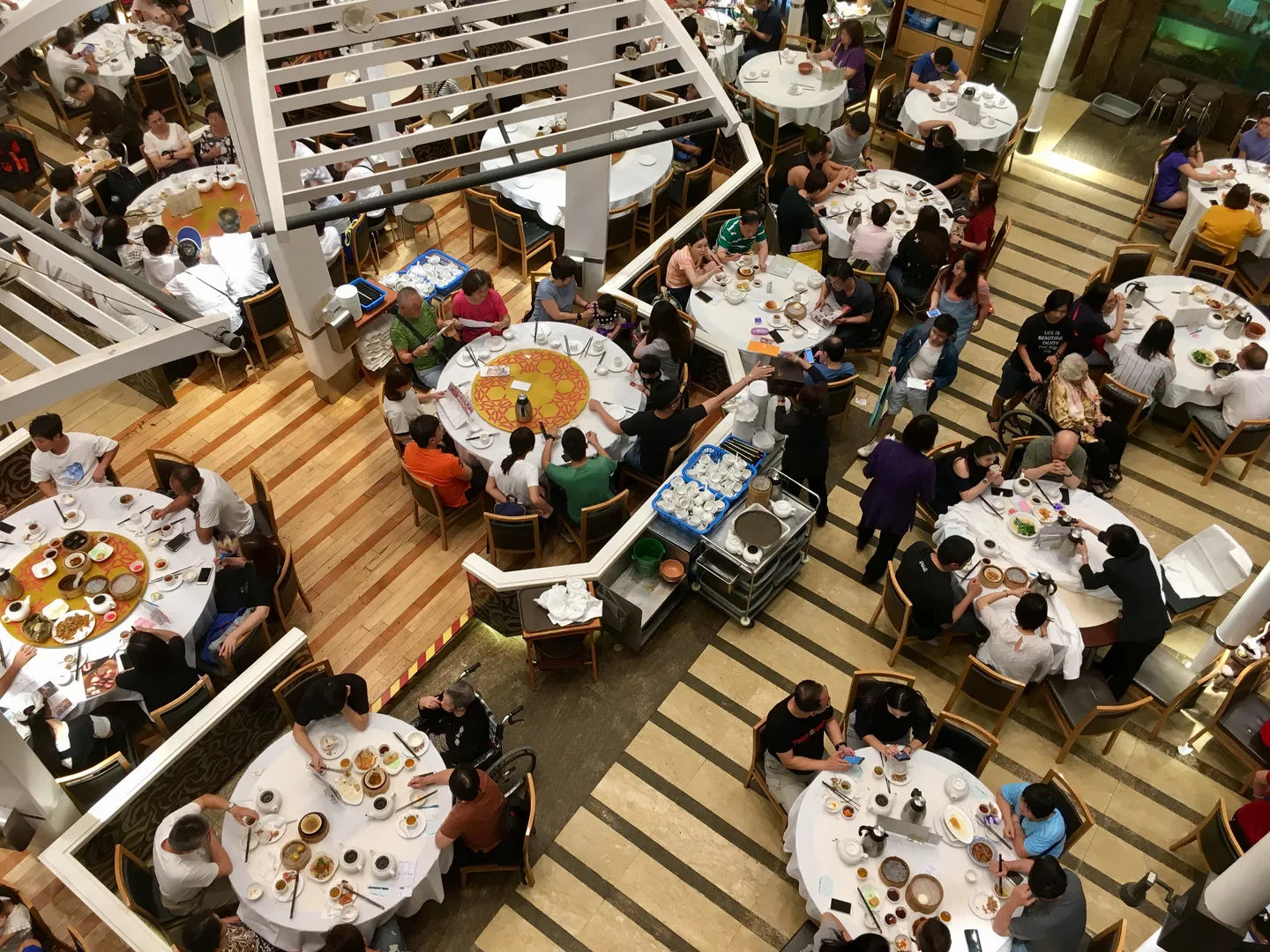
Two fingers, tapped twice on the table, is the only piece of Hong Kong dining etiquette you genuinely have to learn — it means "thank you" when someone pours your tea, and locals do it reflexively. Everything else at yum cha is logistics: choose a tea, mark an order card, and let the table fill up. This guide was written against sourced descriptions of Cantonese tea-house practice, checked 16 August 2026. - Sit down → the server asks which tea. Answer, don't defer. - Tea poured for you → tap two fingers on the table - Teapot empty → tilt the lid open and leave it - Ordering is by paper card at most places now; trolleys are the exception, not the rule - The bill will usually carry charges you didn't explicitly order — see the last section
How a Yum Cha Meal Actually Runs
"Yum cha" translates as "drink tea," not "eat dumplings," and the order of that phrase tells you how the meal is structured. Tea comes first and stays central; dim sum is what you eat alongside it. The classic Cantonese phrase for a modest morning visit is *yat jung leung gin* (一盅兩件) — one pot of tea, two items.
| Stage | What happens | What you do |
|---|---|---|
| Seated | Server asks which tea immediately | Name one (see below) — hesitating slows the whole table |
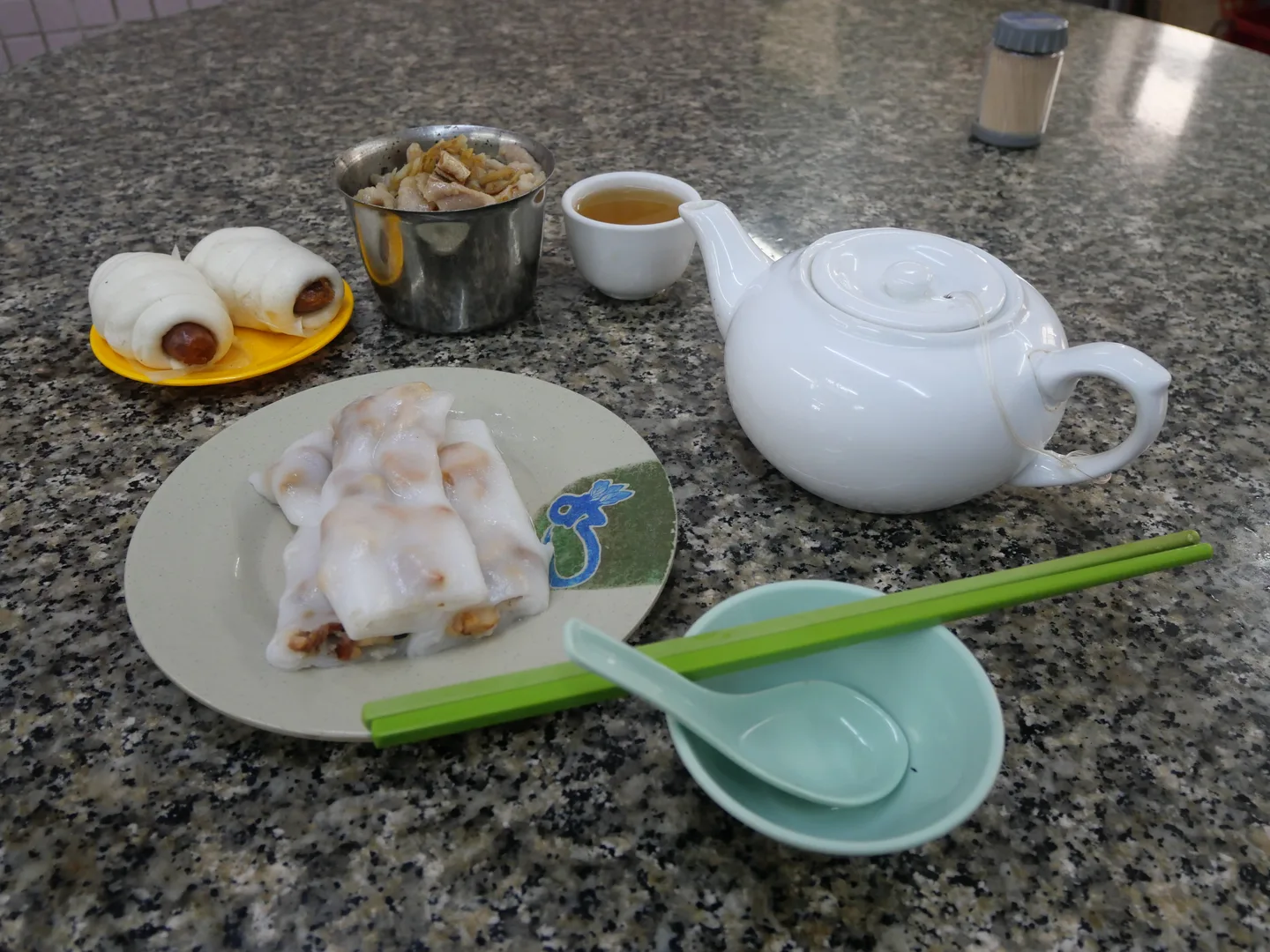
| Tea and crockery arrive | A bowl of hot water may come too | Rinse your cup, bowl, chopsticks and spoon into the bowl; this is normal, not an insult |
| Ordering | Paper order card, or a trolley in older houses | Tick quantities on the card and hand it over |
| Eating | Steamers land as they're cooked, not in courses | Share family-style; three or four pieces per steamer |
| Refills | Pot runs dry | Tilt the lid open and leave it — a server will come |
| Bill | The card is stamped as dishes arrive | It's tallied by category, not by individual dish |
Timing matters more than most visitors expect. Yum cha is a morning-to-early-afternoon meal — *zou cha* (morning tea) or *ha ng cha* (afternoon tea). Some houses do run a night sitting, but the full trolley-and-crowd experience is a daylight thing, and the best places are busiest between roughly 10am and 1pm on weekends.
The Tea Rituals That Actually Matter
The tea customs are short and worth getting right, because they're the part locals will notice.
| Gesture | Meaning | When to use it |
|---|---|---|
| Tap index and middle fingers twice on the table | "Thank you" for tea poured | Every single time, including when a stranger at a shared table pours |
| Tilt or flip open the teapot lid | "Please refill" | When the pot is empty — don't wave or call out |
| Pour for others before yourself | Basic courtesy at any Cantonese table | Especially for anyone older than you |
The finger-tap has a story attached: the Qianlong Emperor travelled incognito and poured tea for his own companions, who couldn't kowtow without exposing him — so they tapped two fingers on the table instead. Whether or not the story is literal history, it's the explanation every Hong Konger will give you.
Which tea to ask for. You'll be asked before you've read anything, so have an answer ready:
- Po lei (pu-erh) — dark, earthy, the default at most tea houses and the one that cuts through fried dim sum
- Sau mei — light, mild, easy if you don't like strong tea
- Heung pin (jasmine) — floral, widely liked
- Guk pou — chrysanthemum with pu-erh, slightly sweet
Any of these is a correct answer. There is no wrong choice, only a slow one.
Ordering Without Getting It Wrong
Most Hong Kong dim sum restaurants have moved to a paper order card: a menu grid where you write quantities, hand it to a server, and get dishes cooked to order. The pushcart format still exists in a handful of older halls, and it's fun, but it's now the minority.
- Order in waves, not all at once. Four or five items for two people to start; steamers arrive fast and a table stacked with cold food is the usual rookie mistake.
- Portions are three or four pieces. For two people that's awkward with three-piece steamers — order an extra of something you both want rather than dividing badly.
- Dishes are priced by category — small, medium, large, extra-large, special — and stamped onto your bill card as they land. The category, not the dish name, is what determines the price.
- You may be asked to share a table. *Daap toi* (搭枱) — seating strangers together to turn tables faster — is standard in busy places. Nod, sit, and carry on; it isn't a downgrade.
- Don't stack empty steamers out of the way yourself in a trolley house; staff count them.
One habit that saves confusion: keep the bill card face-up on the table. Hiding it under a plate means a server has to interrupt you to find it.
The Bill: Charges You Didn't Order
This is where visitors most often feel ambushed, so it helps to know what's coming.
- A tea and condiment charge is normal. Most tea houses bill per head for tea, pickles and the small dishes that appear without being ordered. It's a standard line item, not an error.
- Sit-down restaurants generally add a service charge to the bill. Check for the line before you decide whether to add anything on top — in practice most diners don't leave extra beyond rounding up.
- Cash still matters. Older tea houses and market-adjacent shops can be cash-only or card-with-a-minimum, even as the rest of the city runs on Octopus and mobile payments.
- Splitting the bill is uncommon. In a local group, one person pays and the settling-up happens later or not at all. Fighting over the bill is genuinely part of the ritual.
How much of this is tipping versus a fixed charge varies by country across the region — our tipping in Asia breakdown covers the ten-country picture if you're combining Hong Kong with other stops.
When You'd Rather Someone Else Did the Choosing
The hardest part of eating well in Hong Kong isn't etiquette — it's picking from thousands of options in a city where the best places often have no English menu and a queue system you can't read. That's the specific problem a small-group food tour solves: someone else has already chosen the shops, handled the ordering, and knows which counter to join.
The tours worth comparing here split into two kinds — Hong Kong Island walks that lean on tea houses and dai pai dong culture, and Kowloon street-food routes built around Michelin-listed hole-in-the-wall shops. If you're already planning a Peak day, our Peak Tram ticket comparison pairs naturally with an Island-side morning. Current platform prices for the food tours are below.
Compare prices for related tickets


FAQ
What does tapping fingers on the table mean in Hong Kong?
It means thank you for the tea. Tap your index and middle fingers twice on the table whenever someone fills your cup — it's the standard silent acknowledgement at any Cantonese table, and you use it for strangers as well as friends.
How do I ask for more tea at a dim sum restaurant?
Tilt the teapot lid open and leave it that way. Servers scan tables for open lids and will refill without being called. Waving or shouting for attention is unnecessary and reads as impatient.
Do I order dim sum from trolleys or from a menu?
From a paper order card at most restaurants today. You write quantities on a grid, hand it to a server, and dishes arrive cooked to order. Pushcart service still exists in some older tea houses but is now the exception.
Why is there a charge on my bill I didn't order?
It is almost certainly the tea and condiment charge, billed per person, plus a service charge. Both are standard at Hong Kong tea houses and cover the tea, pickles and small side dishes that arrive automatically.
Is it rude if staff seat strangers at my table?
No — it's called daap toi and it's routine in busy Hong Kong restaurants. Sharing a table lets the restaurant seat waiting diners faster. Nod at your table-mates, keep to your side, and continue as normal.
Sources
- Wikipedia — Yum cha (finger tapping, teapot lid signal, ordering formats, meal timing)
- Wikipedia — Dim sum (family-style sharing, portion counts, price categories, bill cards)
- Wikipedia — Cha chaan teng (daap toi table sharing, service pace)
- Wikipedia — Hong Kong tea culture (yat jung leung gin, morning tea habit)
More guides
- Culture & Etiquette · 2026-08-19Thailand Etiquette 2026: Temples, Monks and the Legal Lines
- Culture & Etiquette · 2026-08-12Japan Etiquette 2026 — Onsen, Trains & Temple Rules
- Culture & Etiquette · 2026-08-04Korean Etiquette 2026 — 12 Mistakes Tourists Make
- Culture & Etiquette · 2026-07-30Tipping in Asia: What to Do in All 10 Countries (2026)