Korean Etiquette 2026 — 12 Mistakes Tourists Make
Updated: 2026-08-04
The single most common mistake tourists make in Korea is pouring their own drink at a group meal — it reads as impolite because drinks are meant to be poured for each other, oldest first. Most Korean etiquette rules trace back to the same root: respect for age and hierarchy. The table below is the quick version; the 12 numbered mistakes after it explain each one and the reason behind it.
Do's and Don'ts at a Glance
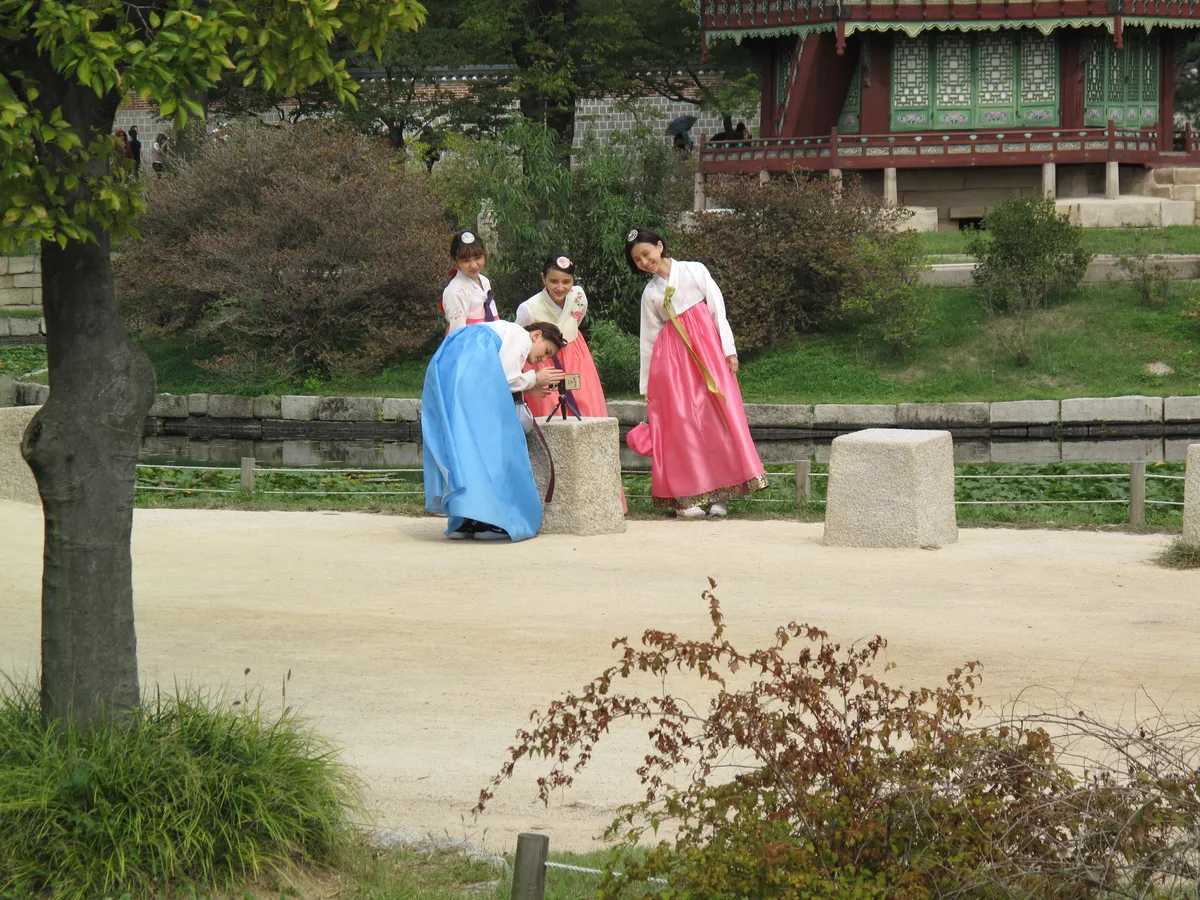
!Tourists visiting Gyeongbokgung Palace, Seoul *Photo: G41rn8 (CC BY-SA 4.0), via Wikimedia Commons*
| Situation | Do | Don't | Why |
|---|---|---|---|
| Starting a meal | Wait for the eldest person to pick up their spoon first | Start eating before elders do | Age hierarchy governs the pace of a shared meal |
| Chopsticks | Use the spoon for rice and soup, chopsticks for side dishes | Stick chopsticks upright in a rice bowl | Upright chopsticks resemble incense burned for the dead |
| Pouring drinks | Pour for others; receive with two hands, or one hand supporting the pouring arm | Pour your own drink at a group table | Drinks are a shared ritual, not self-service |
| Tipping | Round up small change if you want — it's optional, not expected | Leave a tip assuming it buys better service | Service charge, if any, is already in the price |
| Subway/bus | Give up the pink (priority) seats to elders, pregnant riders | Talk loudly on the phone or eat strong-smelling food | Quiet, considerate behavior is the norm on Seoul's subway |
| Temples & palaces | Dress modestly, remove shoes on raised wooden floors when asked | Point your feet at a Buddha statue or step over offerings | Physical respect toward sacred imagery matters |
!Sujeo — Korean spoon and chopsticks set *Photo: d3j4vu (CC BY-SA 3.0), via Wikimedia Commons*
Mistakes 1–5: At the Table
1. Starting to eat before the eldest person does. The most senior person at the table picks up their spoon first — wait for them, even at a casual meal. Age hierarchy sets the pace of a shared meal.
2. Eating rice with your chopsticks. A Korean table setting pairs a spoon (for rice and soup) with chopsticks (for everything else). Using chopsticks for rice isn't wrong, but locals mostly reach for the spoon.
3. Standing your chopsticks upright in the rice bowl. This is the one gesture to avoid outright — it echoes incense burned for the dead, a funeral rite rather than a dining habit.
4. Pouring your own drink. At a group table, drinks are poured for each other, usually starting with the eldest person present. Pouring for yourself is the mistake visitors make most.
5. Taking a poured drink one-handed. When someone senior pours for you, hold the glass with both hands, or one hand while the other lightly touches your forearm. It's a small gesture of respect — not a rule enforced on tourists, but it's noticed and appreciated.
Mistakes 6–8: Tipping & Money Manners
6. Tipping to get better service. Tipping isn't part of Korean service culture — restaurants, taxis, and hotels don't expect it, and offering cash can occasionally cause confusion rather than gratitude.
7. Adding a tip on top of a service charge. Some upscale hotels add a service charge automatically. That's separate from tipping and already reflected on the bill, so a cash tip on top pays twice for the same thing.
8. Carrying cash "just in case" for tips. Card payment is the default almost everywhere, including small shops and street stalls — a tipping float isn't something you need to plan for.
Mistakes 9–12: Subway, Temples & Palaces
!Seoul Metro Line 2 train interior *Photo: Brit in Seoul (CC BY-SA 4.0), via Wikimedia Commons*
9. Sitting in the pink priority seats. Seoul's subway reserves them for elderly, pregnant, and disabled riders — sitting there as an able-bodied tourist, even when the carriage is empty, tends to draw quiet disapproval.
10. Talking loudly — or eating something pungent — on public transport. Phone calls are kept short and quiet; loud conversations and strong-smelling food both stand out immediately.
11. Turning up at a temple or palace in shorts and a tank top. Cover shoulders and knees, and take your shoes off on raised wooden floors when asked. Don't point your feet at a Buddha statue or step over offerings.
12. Photographing inside restricted halls. Follow posted photography rules — some inner halls (like at Jogyesa or Bulguksa) restrict photos of the main Buddha statue.
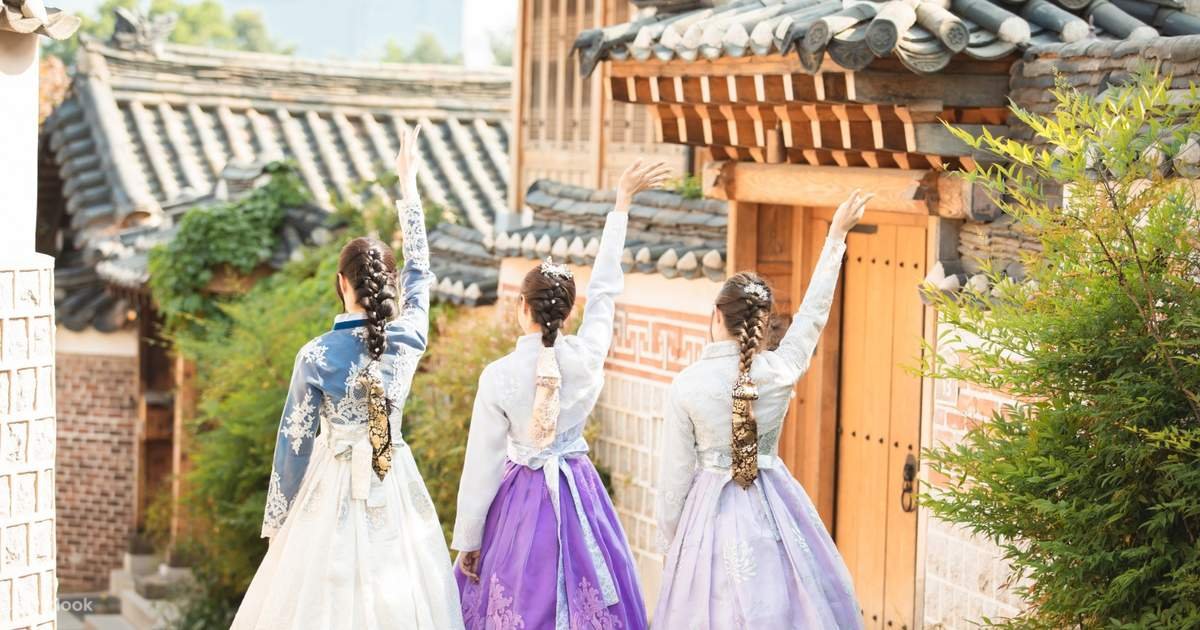
Want a hands-on way into the culture instead of just reading about it? A Gyeongbokgung hanbok experience — renting traditional dress and walking the palace grounds — is a popular first stop; self-tracked data shows it from $13.19 (Klook, observed Jun 14, 2026).
Compare prices for related tickets
FAQ
Do you tip in Korea?
No — tipping isn't expected at restaurants, taxis, or hotels in Korea. Prices already reflect the full cost of service.
Is it rude to pour your own drink?
Yes, at a group table it's considered impolite. Drinks are poured for each other, usually starting with the eldest person present.
Can I wear shoes indoors?
In homes and traditional restaurants with floor seating (ondol), shoes come off at the entrance. Most modern restaurants and shops are fine with shoes on — look for a shoe rack near the door as the cue.
What are the chopstick taboos in Korea?
The main one is never sticking chopsticks upright in a bowl of rice — it resembles incense offered to the dead. Otherwise, use the spoon for rice and soup, chopsticks for side dishes.
Do I need to bow when greeting someone?
A slight nod of the head is common and appreciated, especially with elders or in formal settings, but tourists aren't expected to master a full bow — a handshake with a small nod covers most situations.
Sources
More guides
- Culture & Etiquette · 2026-07-30Tipping in Asia: What to Do in All 10 Countries (2026)
- Money & Exchange · 2026-08-05Japan Money Exchange 2026: Airport vs City vs ATM
- Deals & Lowest Prices · 2026-08-05Seoul Sky Observatory Ticket 2026 — Cheapest Platform
- Airports & Transit · 2026-08-04Narita & Haneda to Tokyo 2026 — Every Option Priced