Taiwan Etiquette & Manners 2026: MRT, Temples, Tipping
Updated: 2026-09-08
In Taiwan the rule that catches most visitors is the Taipei MRT: once you pass the ticket gates, all eating and drinking is banned, water included, with fines of NT$1,500 to 7,500. Restaurants do not expect tips, but hotels and higher-end restaurants add a 10% service charge to the bill. The details below were checked against official sources as of 2026-08-16.
MRT: the gate line is the rule line
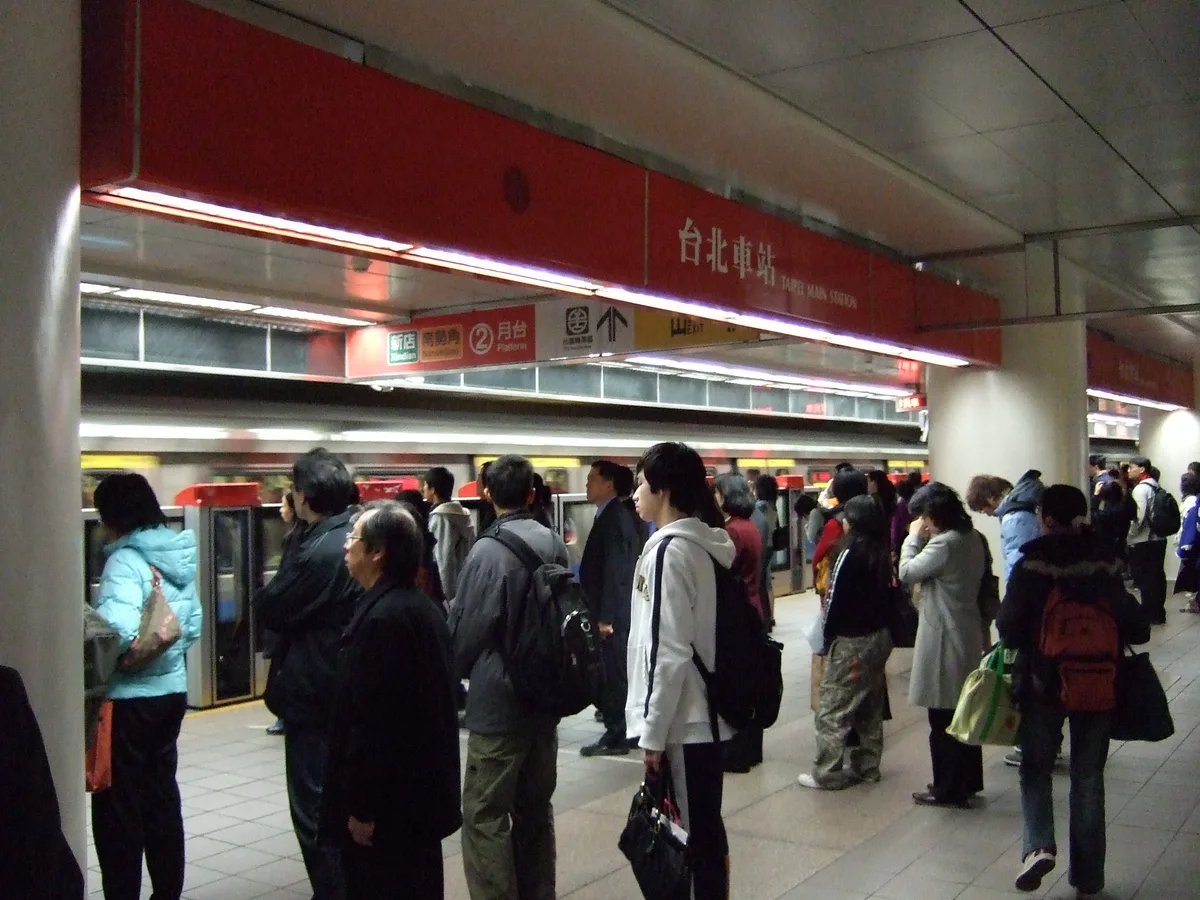
!Platform at a Taipei MRT station *Photo: H.T. Yu (CC BY-SA 2.0), via Wikimedia Commons*
Carrying a coffee onto the subway is normal in many cities. In Taipei it is an offence under the Mass Rapid Transit Act.
| Situation | Taipei MRT rule | What to know |
|---|---|---|
| Food and drink | Banned inside the paid area, from the ticket gates onward. Bottled water counts | Fine of NT$1,500-7,500 under Article 50 of the Mass Rapid Transit Act |
| Gum and betel nut | Chewing is banned | Candy and gum are treated as eating; finish before the gates |
| Smoking | Banned in all stations and trains | Includes outdoor platforms |
| Priority seats (博愛座) | Left empty for elderly, pregnant, disabled and passengers with small children | No legal penalty, but strong social pressure; people who refuse to give up a seat are regularly shamed on social media |
| Queueing | Two lines behind the floor arrows; let passengers off first | Compliance is high; follow the markings |
- The gate is the boundary. In the shopping areas of a station, outside the gates, you can drink. Once you tap in, you cannot. The safe habit is to put your bottle in your bag before you tap.
- Standing on one side of the escalator has been discouraged on safety grounds and practice varies by person. Just follow whoever is in front of you.
- E-cigarettes cannot be brought into Taiwan at all. Taiwan Customs states that vaping devices and e-liquids are prohibited from import under the Tobacco Hazards Prevention Act. Even transit passengers are directed to leave them at the bonded baggage counter and collect them on departure.
Restaurants: no tips, but a service charge and set hours
What trips visitors up in restaurants is less about manners and more about how the bill and the clock work.
| Item | Taiwan | What to know |
|---|---|---|
| Tipping | Not a tipping culture | The Tourism Administration notes a 10% service charge is customary at hotels and restaurants |
| The bill | The service charge is usually already included | Check the line item; do not add more on top |
| Restaurant hours | Lunch roughly 11:00-14:00, dinner 17:00-22:00 | Many places are closed at 15:00 |
| Department stores | Mostly 11:00-21:30 | Open and close later than many visitors expect |
| Convenience stores | 24 hours as standard | Late-night food, payment and transit-card top-ups all happen here |
At street stalls and everyday eateries, cash and mobile payment (LINE Pay, EasyCard) are both widely accepted. Rounding the bill up slightly is as far as anyone goes; handing over a tip is not expected.
Two table habits worth knowing: lifting your rice bowl to eat is the natural way, and drinking etiquette is relaxed, with no ritual around receiving or pouring, though holding your glass slightly lower than the other person's when clinking still reads as polite. Do not stick chopsticks upright in a bowl of rice.
Temples and night markets: when in doubt, do not
!Worshippers at Longshan Temple in Taipei *Photo: CEphoto, Uwe Aranas (CC BY-SA 3.0), via Wikimedia Commons*
Temples are tourist sights and active places of worship at the same time. Even at Longshan Temple, worshippers outnumber visitors.
- Read the sign at the entrance first. Whether you may light incense, and where photography is allowed, varies from temple to temple.
- Do not point at statues with a finger. If you need to indicate one, use an open palm.
- Do not step on the threshold. Older buildings have high thresholds; step over them.
- Do not cut in front of someone praying. Walk around a person standing with incense rather than crossing their line of sight.
- Avoid flash photography inside the main hall or directly in front of statues. Many areas are marked no-photo.
- Dress modestly. Sleeveless tops and shorts rarely get you turned away, but a light cover-up is easier at busy times.
The number of incense sticks and the order of prayer differ by temple and tradition. If you are unsure, do not take incense; walk through quietly instead. That beats copying someone and getting it wrong.
!Lantern-lit alley in Jiufen at night *Photo: Another Believer (CC BY-SA 4.0), via Wikimedia Commons*
At night markets, queue at each stall and follow the vendor's directions. Taking photos and walking off, or ignoring the order of the line, is the main way visitors annoy stallholders. The busiest window is 19:00-21:00.
Five phone numbers and one voltage
The practical part. Taiwan's visitor infrastructure is good, and most problems can be solved with the right number.
| Situation | Number | Note |
|---|---|---|
| Police | 110 | Free |
| Fire and ambulance | 119 | Free |
| Weak signal | 112 | Emergency number that connects on any carrier |
| Tourist information | 0800-011-765 | Travel information hotline |
| Foreigner assistance | 1990 | General help line for foreign residents and visitors |
- Voltage is 110V, 60Hz, with flat-blade Type A sockets. US devices plug straight in. Travellers from Korea, Europe, the UK or Australia need a plug adapter, and any single-voltage 220-240V appliance (hair dryers, some stylers) will underperform. Chargers labelled 100-240V are fine with only the adapter.
- Currency exchange is available at government-designated banks and at hotels, according to the Tourism Administration.
Know the rules, go further
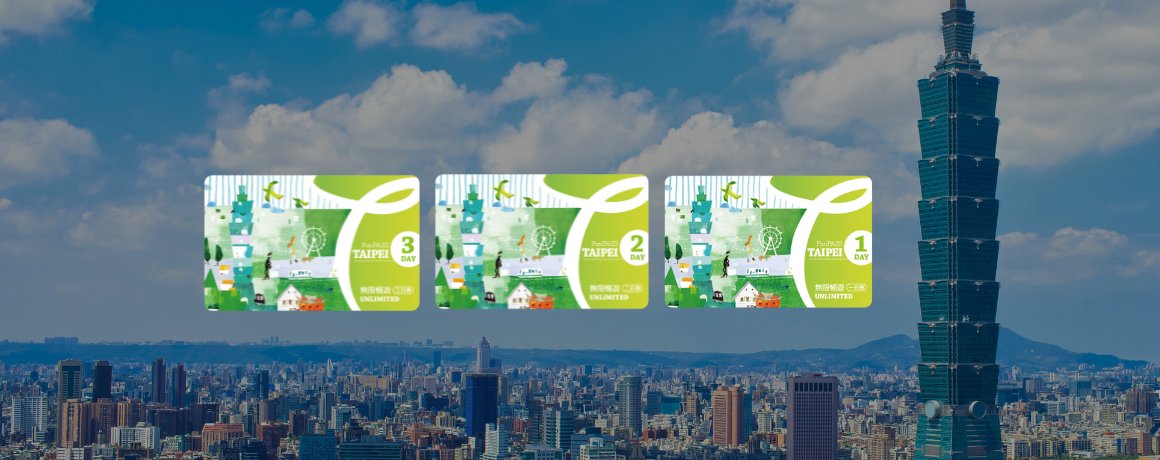
Once you move the way residents do, you can leave the tourist corridor without feeling out of place. With the MRT rules down, central Taipei is easy to cover on a single transit pass; booking ahead for the National Palace Museum cuts the entry wait; and for Yehliu, Jiufen and Shifen, where public transport connections are slow, a day tour packs far more into the day.
As a next step: the classic Jiufen and Shifen tour with a local guide starts from $17.05 (Klook, tracked 2026-07-11), and a Taiwan eSIM from $0.62 (KKday, tracked 2026-07-09). Confirm current terms on each product page.
General information only. Check official sources and local notices for your specific situation.
Compare prices for related tickets


FAQ
Can I drink water on the Taipei MRT?
No. Inside the paid area, past the ticket gates, all food and drink is banned and bottled water is not an exception. Chewing gum or betel nut is also prohibited, and smoking is banned throughout stations and trains, with fines of NT$1,500-7,500.
Do I tip in Taiwan restaurants?
No separate tip is expected. The Tourism Administration notes that a 10% service charge is customary at hotels and restaurants, and it is usually already on the bill. Check the line item and pay what is printed.
Can I bring my vape into Taiwan?
No. Taiwan Customs states that e-cigarette devices and liquids are prohibited from import under the Tobacco Hazards Prevention Act. If you are transiting with one, it is held at the bonded baggage counter and returned when you depart.
Will my electronics work in Taiwan?
Check the label. Taiwan runs on 110V, 60Hz with Type A sockets, so US plugs fit directly and 100-240V chargers work anywhere with an adapter. A single-voltage 220V appliance from Korea, Europe or Australia is not worth plugging in.
Do I have to light incense at a temple?
No. Prayer procedures differ by temple and tradition, so if you are unsure it is better to skip the incense and look around quietly. Not pointing at statues and not stepping on thresholds are enough to stay respectful.
Sources
- Taiwan Tourism Administration - Useful Tips (service charge, opening hours, emergency numbers, voltage)
- Taipei Metro (Wikipedia) - ban on food, drink, gum, betel nut and smoking in the paid area
- Taiwan Customs Administration - e-cigarettes prohibited for travellers
- Taipei Rapid Transit Corporation - Metro Etiquette
More guides
- Plan & Pack · 2026-09-15Taiwan Packing Checklist 2026: EasyCard, Cash & eSIM
- Plan & Pack · 2026-09-15Japan Plugs & Voltage 2026: Do Americans Need an Adapter?
- Plan & Pack · 2026-09-08Korea Packing Checklist 2026: T-money, eSIM, K-ETA Waiver
- Plan & Pack · 2026-09-08Japan Packing Checklist 2026: Cash, IC Cards, Power Banks