
Japan Emergency Numbers 2026: 110, 119 & English Help
By Alvin LimPublished Updated
views 12AI reads 173
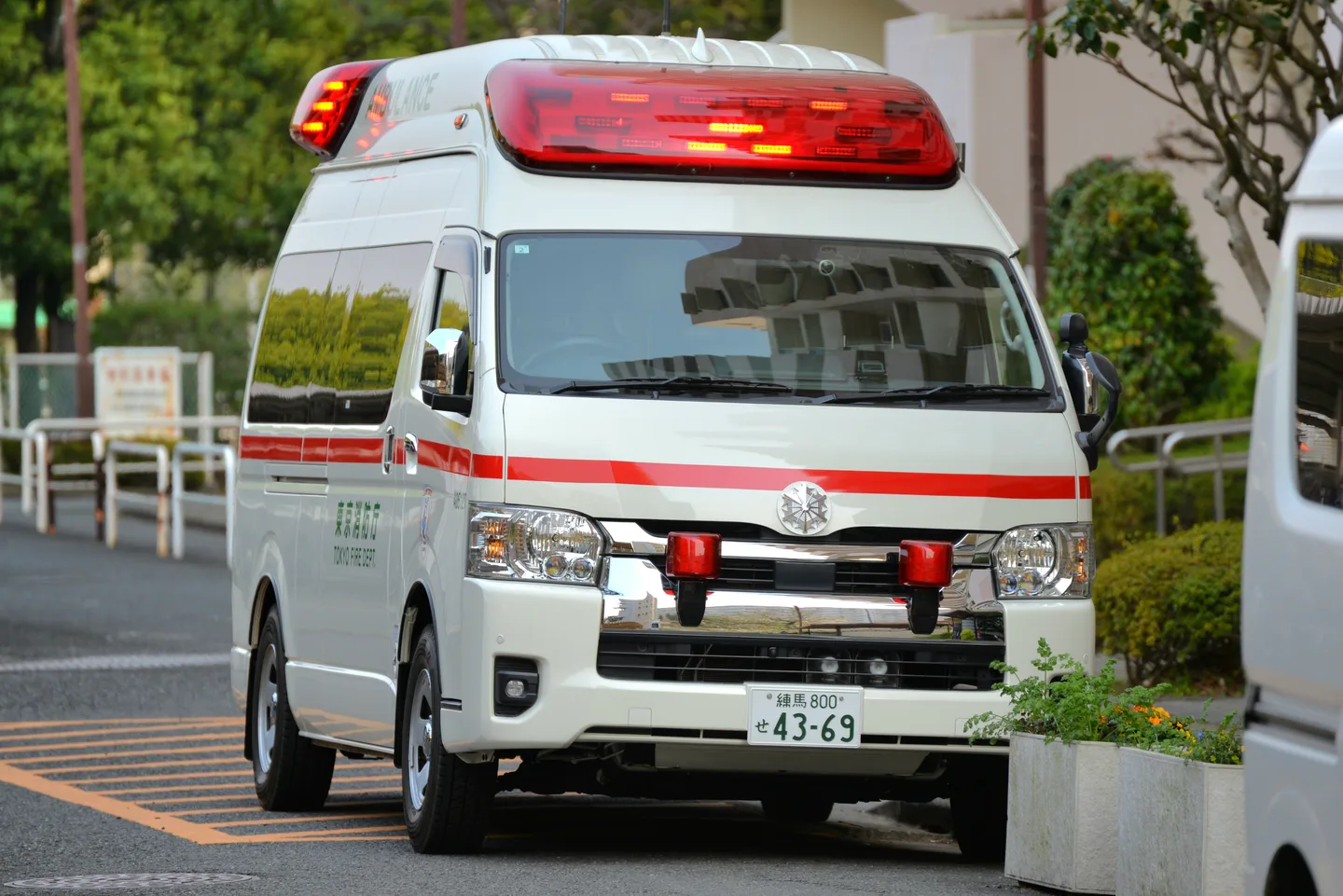
In Japan, dial 110 for police and 119 for fire or ambulance, both free and available nationwide; for non-emergencies in English, Chinese or Korean, call the Japan Visitor Hotline at 050-3816-2787, 24 hours a day. As of September 2026, these numbers were rechecked against official National Police Agency, Fire and Disaster Management Agency and JNTO pages.
The Four Numbers Worth Saving Before You Fly
Save these as contacts on your phone before departure — searching for a hotline while standing over someone who is hurt is not the moment to discover you have no signal and no bookmarks.
| Number | Use it for | Hours | Language support | Charge |
|---|---|---|---|---|
| 119 | Ambulance, fire, rescue | 24/7 | Three-way interpretation at 673 of 720 fire departments, each covering English, Chinese and Korean; Tokyo adds Portuguese and Spanish | Free call |
| 110 | Crime, theft, traffic accident, police report | 24/7 | Japanese first; police can add an interpreter on a three-way call | Free call |
| 050-3816-2787 — Japan Visitor Hotline (JNTO) | Illness, accidents, disasters, general travel trouble, referrals to foreign-language clinics | 24 hours, 365 days | English, Chinese, Korean | Standard call rate (not free) |
| 0120-339-266 or 03-6233-9266 — AMDA International Medical Information Center | Choosing a clinic in your language, how Japan's medical system works | Weekdays 10:00–16:00, except public holidays and 29 Dec–3 Jan | Varies by day (see below) | Free service; 0120 is toll-free |
AMDA runs a language rota rather than staffing every language every day:
- English — every weekday
- Korean, Filipino — Monday
- Chinese — Tuesday and Thursday
- Thai — Tuesday
- Spanish — Wednesday
- Vietnamese — Wednesday and Friday
- Portuguese — Friday
From overseas, the Japan Visitor Hotline is +81-50-3816-2787 — worth having if a family member back home needs to check on you.
Other official lines to know
- 118 — Japan Coast Guard, for emergencies at sea. Free, like 110 and 119.
- #7119 — doctors and nurses who help you decide whether you need an ambulance. It runs in 41 areas, including Tokyo, Osaka, Kyoto, Fukuoka and Okinawa, but not everywhere (Kagoshima and Miyazaki are not listed, and some areas use other numbers). Language help varies by area: some centres, such as Kanagawa's and Okinawa's, add a phone interpreter, while Tokyo's does not advertise one.
- #9110 — non-urgent police consultation, routed to the local prefectural police; duty staff or recorded guidance at night and weekends; normal call charges.
- 171 / web171 — NTT's disaster message services, switched on after a major earthquake: 30-second voice messages (Japanese prompts only) or text notes on web171 (English, Chinese and Korean screens, works from abroad), filed under a Japanese phone number. Trial days include the 1st and 15th of each month.
Calling 119 or 110 When You Don't Speak Japanese
The dispatcher will answer in Japanese. Say your language in English ("English, please") and wait — most fire departments now bring in a three-way interpreter rather than transferring you.
According to the Tokyo Metropolitan Government's guidance for foreign residents and visitors, a 119 dispatcher works through five things in order:
- Is this an ambulance call or a fire?
- Where are you? (address or nearest landmark)
- What are the symptoms?
- How old is the patient?
- Your name and a callback number
If the case sounds highly urgent, they dispatch the ambulance before finishing the list — so don't hang up if the questions stop.
Location is the hard part. Japanese addresses are block-based and hostile to visitors. The fastest fixes, in order:
- Read out the nearest convenience store or chain restaurant with the branch name on its sign — there may be several branches close by
- Look for an address plate on the nearest utility pole or vending machine; many carry one
- At a station, give the exit number and line name
- Screenshot your map pin before you call, so you can read coordinates if all else fails; mobile calls to 110 and 119 also send your location when they can, but don't rely on it
If you genuinely cannot speak, JNTO's advice is to show a nearby Japanese person this line: 救急車を呼んでください。 (*Kyūkyūsha o yonde kudasai* — "Please call an ambulance.") For police, 警察を呼んでください。 (*Keisatsu o yonde kudasai*).
Not an Emergency? Finding an English-Speaking Clinic
Most travel medical problems are dull — a fever, a sprained ankle, a rash, a lost prescription. An emergency room is the slow, expensive route for these; JNTO's guide points you to a clinic or general hospital during regular hours, or to after-hours reception, which varies by region.
| If you need… | Use | Why |
|---|---|---|
| A clinic near you that handles your language | JNTO's Medical Institution search | Filters by area, language, medical department, accepted credit cards and 24-hour emergency rooms |
| A human to talk it through | Japan Visitor Hotline (050-3816-2787) | Refers you to institutions where you can consult in a foreign language; it does not interpret three-way or book for you |
| Help choosing a clinic or understanding the system | AMDA (0120-339-266) | Multilingual medical-information specialists, not dispatchers |
A few habits that save an afternoon:
- Go in the morning. Many Japanese clinics run a morning block and an afternoon block with a long midday closure, and take walk-ins only until a cut-off.
- Bring your passport — clinics ask for ID at reception, not just insurance details.
- Photograph any medication you already take, including the box, so a doctor can identify the compound without you spelling it.
- Pharmacies (*yakkyoku*) fill prescriptions and charge separately from the clinic; only some clinics dispense in-house.
What Treatment Actually Costs — and Why Unpaid Bills Follow You
Visitors are not covered by Japan's national health insurance, so you pay the full amount rather than the 30% most insured residents pay. That is the whole reason JNTO's own planning pages tell every inbound traveller to get travel insurance — and some policies can even be bought after you land.
Two details most guides skip:
- Since 2021, foreigners with unpaid medical expenses in Japan may be restricted or refused entry on a later trip. JNTO states this directly on its travel-insurance page, and for unpaid bills arising from 1 April 2026 the Ministry of Health cut the trigger for stricter re-entry checks from ¥200,000 to ¥10,000. A walked-out-on hospital bill is not a problem you leave behind at the airport.
- Emergency transport and the hospital bill are separate things. Municipal fire-department ambulances are generally not billed to the patient; the treatment that follows is charged in full and is the part insurance exists for.
JNTO notes that clinics generally take cash only, with cards accepted mainly at major hospitals, so keep enough yen on hand to cover a first consultation — our airport vs. city money exchange comparison covers where to get it at a sane rate. Keep every receipt and the itemised statement (*meisaisho*); insurers ask for these, plus a diagnosis certificate, when you claim.
*General information, current as of September 2026 — check official sources (JNTO, your embassy, your insurer) for your situation.*
Two Things to Sort Before You Land
None of the hotlines above help if your phone is offline the moment you need them — public Wi-Fi in Japan is patchy and often needs a registration flow you cannot complete one-handed in a crisis. A prepaid data eSIM activated before departure is the cheap insurance here. One catch: data-only SIMs and eSIMs cannot make voice calls, 110 and 119 included, so also keep a line with voice service on (usually your home SIM on roaming). And install the Japan Tourism Agency's Safety tips app, which pushes earthquake early warnings, tsunami warnings and weather warnings in 15 languages.
The second is knowing how you'd physically get somewhere. Central Tokyo's clinic cluster is subway-dense, and a multi-day subway pass removes the fumbling-for-fare step entirely — see our Narita and Haneda to Tokyo guide for how the airport transfers connect to that network. Both products are compared below.
Compare prices for related tickets


FAQ
Is calling 110 or 119 free in Japan?
Yes — both are free from Japanese mobile phones, landlines and public payphones, and a payphone needs no coin or card (if it has a red emergency button, press that first). The catch: data-only SIMs and eSIMs cannot place the call at all, so keep a line with voice service active, such as your home SIM on roaming, or use a payphone.
Can I call 119 in English?
Yes, in most of Japan. As of 1 January 2025, 673 of the country's 720 fire departments offered three-way phone interpretation, every one of them in English, Chinese and Korean, and the Tokyo Fire Department also covers Portuguese and Spanish. If the line cannot interpret, ask a Japanese speaker nearby to call; for anything that is not life-threatening, the Japan Visitor Hotline on 050-3816-2787 is the better first call.
Do I need travel insurance for Japan?
It is not a visa requirement, but JNTO strongly recommends it because without it you pay the full cost of treatment. Unpaid medical bills have been shared with immigration since 2021 and can mean stricter checks or refused entry on later trips, and for unpaid bills arising from 1 April 2026 the threshold dropped from ¥200,000 to ¥10,000.
What number do I call if I've lost my passport?
Report it at the nearest police box (kōban) or police station first and keep the paperwork you are given; call 110 only if it was just stolen or you are in danger, and use #9110 for non-urgent police advice. Embassies such as the US and Australian missions in Tokyo ask you to report the loss to Japanese police before you apply for a replacement or emergency passport. The kōban is the small street-corner police post you will see near many stations.
Which number do I use if I'm just unsure whether it's serious?
Call the Japan Visitor Hotline on 050-3816-2787 — it runs 24/7 in English, Chinese and Korean and can point you to a clinic instead of an ambulance. Japan's #7119 medical advice line now covers 41 areas, including Tokyo, Osaka, Kyoto and Fukuoka, but it is not nationwide and foreign-language help varies by area, so the visitor hotline is the more reliable option for tourists.
Sources
- JNTO — Guide for When You Are Feeling Ill (emergency numbers, medical institution search, hotline scope)
- JNTO / Japan Travel — Japan Visitor Hotline
- Fire and Disaster Management Agency — 119 three-way interpretation, adoption as of 1 January 2025 (Japanese)
- Fire and Disaster Management Agency — #7119 service areas (Japanese)
- Kanagawa Prefecture — #7119 advice line with phone interpretation in 14 languages (Japanese)
- Okinawa Prefecture — #7119 advice line and its supported foreign languages (Japanese)
- National Police Agency — #9110 police consultation line (Japanese, PDF)
- National Police Agency — White Paper 2024: 110 calls and foreign-language response (Japanese)
- Tokyo Metropolitan Government, Bureau of Public Health — How to call an ambulance
- City of Yokohama Fire Bureau — How to call 119 and give your location (Japanese)
- Japan Coast Guard — 118 emergency number (Japanese)
- NTT East — Disaster Emergency Message Dial 171 FAQ
- Japan Tourism Agency / JNTO — Safety tips app
- AMDA International Medical Information Center — English
- JNTO / Japan Travel — Travel Insurance in Japan
- Ministry of Health, Labour and Welfare — Unpaid medical bills and stricter re-entry checks (Japanese)
- U.S. Embassy & Consulates in Japan — Replacing a lost or stolen passport
Alvin LimRuns Alvin Travel
Tour guide for 5 years: a Chinese- and English-language guide in Korea, now a certified Korean-language guide in Taiwan. Based in Taipei and studying for a master's degree at National Taiwan University (NTU).
About us and how our guides are made →More guides
- Stay Safe & Healthy · 2026-10-16Da Nang & Hoi An Rainy Season 2026: Should You Go Oct–Dec?
- Stay Safe & Healthy · 2026-10-06Philippines Typhoon Season 2026: Oct–Dec Risk by Island
- Stay Safe & Healthy · 2026-10-06Thailand Visa-Free Cut to 30 Days (2026): By Passport + TDAC
- Stay Safe & Healthy · 2026-09-25Lost Passport in Japan 2026: Police, Embassy, Flight Home