
Taiwan Typhoon Season 2026 — What Travelers Need to Know
Updated: 2026-08-06
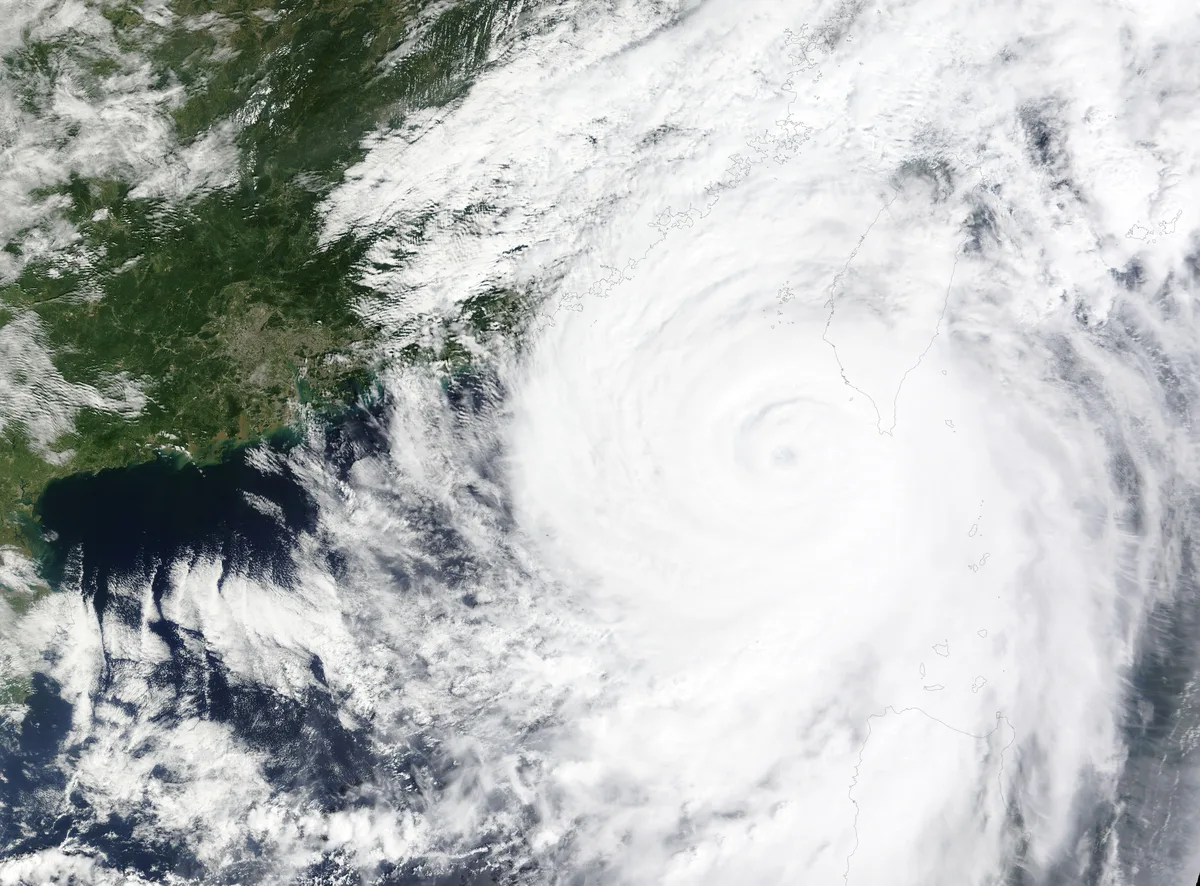
Taiwan's typhoon season runs roughly June–October and peaks in August; forecasters expect around 4–6 storms to affect the island in 2026. Most trips still run fine — the disruption is usually 1–2 days of cancelled tours, ferries, or high-speed rail around a confirmed direct hit, not the whole trip. Check your region's exposure below, then read how a 停班停課 "typhoon day" actually gets declared.
Typhoon Risk by Region: Aug–Oct 2026
| Region | Exposure | Main risk | Aug–Oct trend | Recommended move |
|---|---|---|---|---|
| Taipei / North | Medium | 停班停課 typhoon-day closures on direct hits; MRT usually keeps running, buses/trains stop | Peak Aug, tapering into Oct | Build 1 buffer day around any forecast direct hit |
| Hualien & East Coast | High | Often first landfall point from the Pacific; mountain roads and Taroko Gorge close for landslide risk | Aug–Sep peak | Avoid gorge/mountain day trips when a warning is active |
| Kenting & South | Medium | More often brushed than directly hit; beach/water activities suspended in warnings | Aug–Sep, tapering Oct | Check activity operator status day-of |
| Outlying islands (Kinmen, Matsu, Penghu) | High | Ferry and flight suspensions are common even for glancing storms | Active Aug–Oct | Build 1–2 buffer days either side if flying/ferrying to the islands |
- The Central Weather Administration (CWA) tracks the western Pacific year-round, but June–October is the real planning window — dates outside it are statistical noise.
- 2026 forecasts point to roughly 4–6 storms affecting Taiwan, concentrated in August.
Reading CWA Warnings & Typhoon Days (停班停課)
- Land Warning (陸上颱風警報) — CWA's official trigger: issued when a typhoon is expected to bring winds of 50 km/h (13.9 m/s) or stronger to land areas of Taiwan, Penghu, Kinmen, or Matsu within the next 18 hours, then updated at least every 3 hours.
- Intensity tiers (10-minute sustained wind): Mild Typhoon 17.2–32.6 m/s · Moderate Typhoon 33–51 m/s · Strong Typhoon 51+ m/s.
- 停班停課 (typhoon day): work/school suspension is decided separately by each of Taiwan's 14 local governments, not by a single national rule — so Taipei and Kaohsiung can call it differently for the same storm. Announcements typically land the night before by 9pm, or the morning of by 5am.
- Follow CWA directly (linked in Sources) for the current land warning status on your route — local government typhoon-day pages update once CWA's warning is active.
What Actually Gets Cancelled: Tours, Ferries, HSR
- Tours & day trips: operators generally cancel once a land warning is active for their route, not on forecast alone — expect same-day or day-before notice.
- Ferries (Kinmen, Matsu, Penghu, Green Island, Orchid Island): most exposed to cancellation, since these routes suspend well before mainland transport does.
- High-Speed Rail (HSR): THSRC typically reduces frequency or suspends service only once a land warning covers a station on the line — check THSRC's own service-status page, not just CWA, before a booked ride.
- If a 停班停課 typhoon day is declared where you're staying, expect most shops, attractions, and public transit above ground to close for that day.
- Domestic flights to the outlying islands (Kinmen, Matsu, Penghu, Green Island, Orchid Island) are the single most weather-sensitive leg of any Taiwan itinerary — small planes on these routes cancel well before international flights into Taoyuan do.
Staying Connected & Insurance Logic
- Install CWA's warning app and THSRC/ferry operator apps before you land — hotel wifi can drop during a direct hit.
- Taiwan Unlimited Data eSIM — self-tracked lowest observed price $0.62/day (₩936) via KKday, as of 2026-07-09. Confirm current plan length and coupon terms on the live product page.
- Travel insurance for typhoon cancellations generally only applies if purchased before the storm was named or officially forecast — alvin.travel doesn't sell insurance directly, so buy it early and check your policy's "known event" cutoff.
- If you're already in Taiwan when a land warning is issued: stock up on water and cash (card readers can go down with the power), and avoid mountain roads, riverside paths, and coastal boardwalks even after the wind seems to ease — landslide and flash-flood risk often peaks a few hours after the worst wind.
- Convenience stores (7-Eleven, FamilyMart) generally stay open through all but the strongest typhoon days and are a reliable fallback for supplies and ATM access.
General information only — for your specific trip, confirm current conditions with CWA and your airline/tour operator directly.
Compare prices for related tickets

FAQ
Is it safe to visit Taiwan in typhoon season?
Yes, for most of the island most of the time — a direct hit typically disrupts 1–2 days in one region, not an entire trip. Hualien and the outlying islands see the most disruption, so build in buffer days if that's part of your route, and keep an eye on CWA in the days right before you fly.
What is a typhoon day (停班停課)?
A local-government-declared suspension of work and school once a CWA land warning is active for that area — it's decided city by city, not nationally, so neighboring counties can make different calls for the same storm. Announcements usually land the night before by 9pm or by 5am that day.
Will HSR/tours run during a typhoon?
Only until a land warning covers their route — HSR and tour operators generally suspend service once CWA's warning is active for their specific area, not on a forecast alone. Domestic flights to the outlying islands tend to cancel earliest of all.
Does insurance cover typhoon cancellations?
Only if you bought the policy before the typhoon was named or officially forecast — check your policy's "known event" cutoff date before assuming you're covered, since most policies exclude storms already in the news at purchase.
Sources
More guides
- Stay Safe & Healthy · 2026-08-18Common Scams in Bangkok 2026: The Setups That Actually Work
- Stay Safe & Healthy · 2026-08-11Vietnam Tourist Scams 2026 — Taxi, Money & How to Avoid
- Stay Safe & Healthy · 2026-08-02Japan Typhoon Season 2026 — Should You Cancel? (Risk Map)
- Stay Safe & Healthy · 2026-07-27Thailand Emergency Numbers & Hospitals Guide (2026)