
Vietnam Money 2026: Gold Shops vs Airport vs ATM
By Alvin LimPublished Updated
views 13AI reads 151
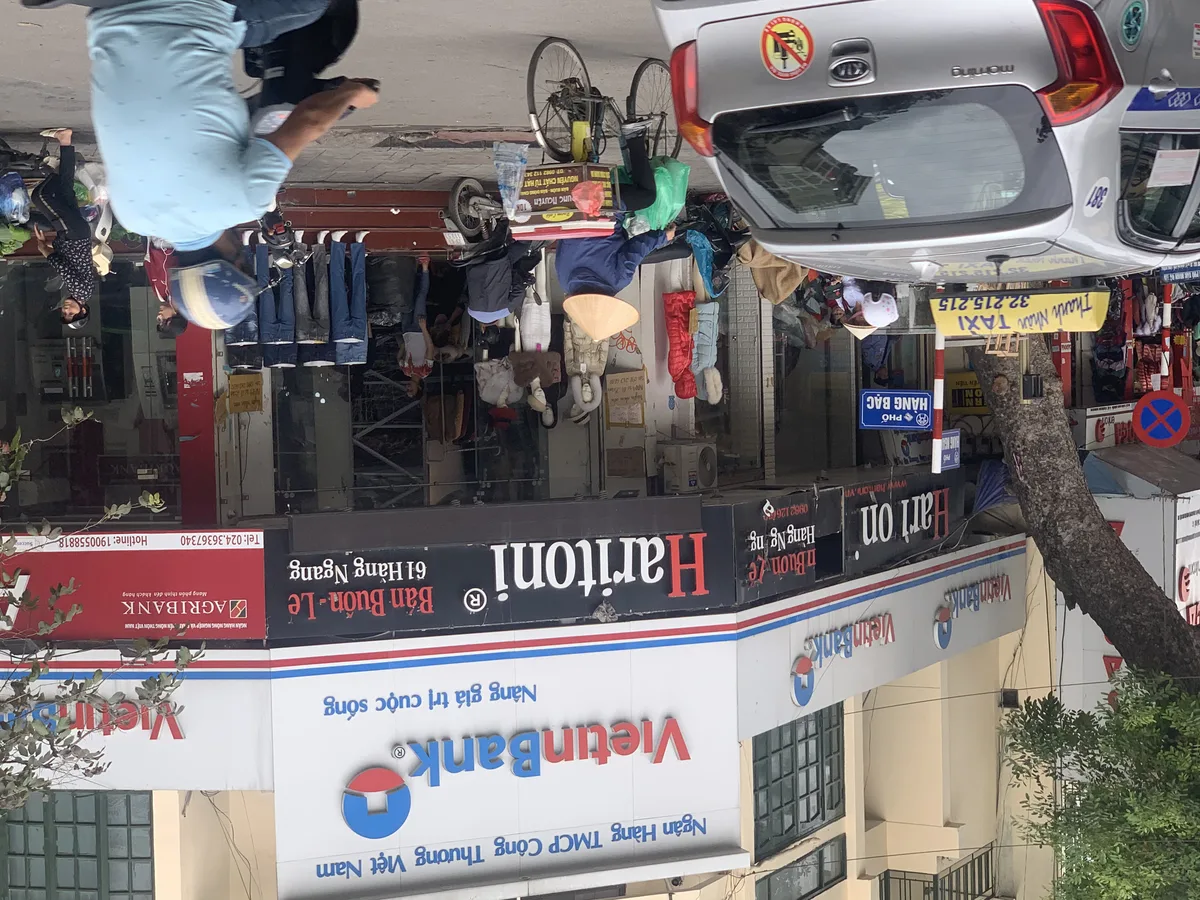
Change just US$20-50 at the airport arrival booth to cover the taxi and first meal, then use bank branches, licensed exchange counters or ATMs for the rest, which stays close to the interbank rate (checked 16 August 2026).
Where You Can Change Money in Vietnam
Vietnam restricts foreign-currency exchange to credit institutions and licensed exchange agents. Everything else — hotels that "help", shops offering a rate, individuals on messaging apps — sits outside that framework, however routine it looks.
| Option | Legal footing | Typical rate | Hours | Best for |
|---|---|---|---|---|
| Bank branch (Vietcombank, BIDV, Techcombank, etc.) | Licensed | Close to interbank | Weekday business hours, often closed for lunch | The main bulk of your cash |
| Licensed exchange agent (đại lý thu đổi ngoại tệ) | Licensed | Close to bank rate | Longer than banks, varies | Convenience near tourist districts |
| Airport arrival counter | Licensed | Noticeably below city rates | Matches flight arrivals | A small starter amount only |
| Hotel front desk | Usually not licensed | Weakest of the group | 24h | Emergencies only |
| Gold / jewellery shop | Grey zone (see next section) | Often the sharpest quoted | Retail hours | Understand the risk first |
| ATM withdrawal | Fully legal | Card network rate, minus fees | 24h | Topping up mid-trip |
- Bring clean, unmarked, recent-series USD notes — torn or heavily creased bills are often refused or discounted.
- US$100 bills usually get a better rate than US$20s at the same counter.
- Licensed agents display a State Bank licence certificate; a visible certificate is the simplest sanity check.
- Count the cash before leaving. Vietnamese notes run to six and seven figures, so a missing 100,000₫ is easy to overlook.
The same counter-by-counter logic applies in Thailand.
Gold Shops: Great Rates, Murky Licensing
Hanoi's Hà Trung street and similar gold-and-jewellery clusters in Ho Chi Minh City have exchanged foreign currency for decades, and travellers consistently report better rates there than at banks. The complication: jewellery retail and foreign-exchange dealing are separately regulated. Some of these shops hold an exchange licence, many do not, and a customer at the counter usually cannot tell which is which.
The law itself is not ambiguous. Decree 88/2019/ND-CP sets administrative penalties for buying, selling or exchanging foreign currency at an organisation not licensed to do so:
| Transaction value | Penalty under Decree 88/2019 |
|---|---|
| Under US$1,000 | Warning (first offence) |
| US$1,000 – under US$10,000 | 10,000,000₫ – 20,000,000₫ |
| US$10,000 – under US$100,000 | 20,000,000₫ – 30,000,000₫ |
| US$100,000 and above | 80,000,000₫ – 100,000,000₫ |
The decree also provides for confiscation of the cash involved.
Enforcement against small tourist transactions appears to be rare, and plenty of visitors change money this way without incident. But the exposure sits entirely with you, so this is a trade-off rather than a recommendation: a modest rate improvement against a rule you may be breaking without knowing it. On a few hundred dollars of holiday spending, the gap between a gold shop and a bank branch is usually smaller than the peace of mind is worth.
One firm rule regardless of venue: never exchange money on the street or with someone who approaches you — a different problem, covered in our Vietnam scams guide.
ATMs and Cards: Fees, Caps and the DCC Trap
ATMs are the simplest legal way to top up, but Vietnamese machines add their own charge on top of whatever your home bank takes, and per-withdrawal caps are low.
- Machine fee: commonly around 22,000₫–66,000₫ per withdrawal depending on the bank; amounts vary, so read the on-screen fee notice before confirming.
- Per-withdrawal cap: often 2–5 million₫ (roughly US$80–200). Taking the maximum in one go lowers the fee-per-dong.
- Always choose "without conversion": decline if the ATM offers to bill you in your home currency. Dynamic currency conversion routinely costs several percent.
- Carry a second card — a single blocked card is the cash emergency travellers actually hit.
Cards cover hotels, malls, chain restaurants and mid-range shops in the big cities. Street food, markets, local buses, small guesthouses and rural stops remain cash-first, and QR payment apps are generally tied to Vietnamese bank accounts.
Rules, fees and penalty amounts described here are current as of August 2026 and can change. Confirm anything that matters to you with your bank and with official Vietnamese sources before you travel.
Before You Convert: What You Actually Need Dong For
How much cash to carry is easier to judge once the big-ticket items are booked, because tours, transfers and connectivity are almost always paid by card in advance rather than in dong on the day. That leaves cash for food, taxis, tickets and markets — a smaller number than most first-time visitors assume.
Ha Long Bay day cruises are a good example, and platform pricing for the same trip diverges enough to be worth a look: the same trip is listed on Viator, KKday and GetYourGuide at noticeably different prices, so compare the live listings and check that kayaking, lunch and pickup are included on equal terms. A Vietnam eSIM belongs in the same "sort it before you land" bucket — current prices for both are in the cards below.
Compare prices for related tickets


FAQ
Should I change money before flying to Vietnam?
No — rates for dong outside Vietnam are usually poor, and dong is hard to buy in most countries anyway. Bring US dollars in good condition, change a small amount at the airport for your first taxi and meal, and do the rest at a bank branch or licensed exchange agent in the city.
Is it illegal to change money at a gold shop in Vietnam?
It depends on whether that particular shop holds a foreign-exchange licence, and customers generally can't verify it. Decree 88/2019/ND-CP penalises exchanging currency at unlicensed organisations, with a warning for first offences under US$1,000 and fines rising from 10 million₫ for larger amounts, plus possible confiscation of the cash.
How much cash should I withdraw at once in Vietnam?
As close to the machine's cap as you can, because the fee is charged per withdrawal rather than per dong. Caps are often around 2–5 million₫, so several smaller withdrawals can easily cost more in fees than one large one.
What do I do with leftover dong at the end of the trip?
Convert it back before you leave, at an exchange counter in the departure area of the airport. Vietnamese dong is difficult to sell outside the country and typically attracts a poor rate abroad, so spending it down or converting on departure is the practical approach.
Sources
- Decree No. 88/2019/ND-CP — Administrative penalties in monetary and banking operations (Article 23, foreign exchange)
- VietGo — Vietnam currency exchange regulations 2026: legal locations and penalty risks
- Day Trips Vietnam — Vietnam ATM fees 2026: bank-by-bank foreign-card charges and limits
- Vietnam National Authority of Tourism — Plan your trip: currency & payments
Alvin LimRuns Alvin Travel
Tour guide for 5 years: a Chinese- and English-language guide in Korea, now a certified Korean-language guide in Taiwan. Based in Taipei and studying for a master's degree at National Taiwan University (NTU).
About us and how our guides are made →More guides
- Money & Exchange · 2026-10-09Japan Tax-Free Shopping Nov 2026: Pay Tax, Get It Refunded
- Money & Exchange · 2026-08-10Thailand Money 2026: Exchange, ATM Fees & Cash vs Card
- Money & Exchange · 2026-08-05Japan Money Exchange 2026: Airport vs City vs ATM
- Money & Exchange · 2026-07-25Where to Exchange Money in Seoul (2026): Best Rates