
JR Pass vs Regional Passes: Does the Math Work? (2026)
Updated: 2026-07-12

Short answer, as of July 2026: for most first-time trips the nationwide Japan Rail Pass no longer pays for itself. The 7-day ordinary pass costs ¥50,000, but a Tokyo–Osaka return on the Nozomi is only about ¥29,440 — so a classic Tokyo-plus-Kansai trip is cheaper on single tickets. The pass wins only when you cover a lot of long-distance ground (roughly Tokyo–Hiroshima–Fukuoka and back), and a regional pass usually beats both if you stay in one area. Below we run three real itineraries with verified prices so you can see exactly where the line is.
Does the math actually work? Three real itineraries
This is the whole decision in one table. Prices are ordinary-class, regular-season reserved fares, as of July 2026 (they swing about ±¥400 by season). The "winner" is simply the cheapest way to cover that exact itinerary.
| Itinerary (5–7 days) | Individual tickets | Nationwide JR Pass (7-day) | Best regional pass | Winner |
|---|---|---|---|---|
| 1. Tokyo ⇄ Osaka return, then Kyoto/Nara/Kobe on local trains | ~¥32,000 | ¥50,000 | Kansai Area Pass 3-day ¥5,800 + ¥29,440 shinkansen = ~¥35,000 | Individual tickets |
| 2. Kansai + Hiroshima loop, fly in/out Osaka (KIX): Osaka–Kyoto–Nara–Himeji–Hiroshima–Miyajima | ~¥27,000 | ¥50,000 | Kansai-Hiroshima Area Pass 5-day ¥17,000 | Regional pass |
| 3. Grand tour: Tokyo→Osaka→Hiroshima→Fukuoka→Tokyo, all by shinkansen | ~¥62,000 | ¥50,000 | No single regional pass covers it | Nationwide pass |
The pattern is consistent. One out-and-back long haul (Itinerary 1) never justifies ¥50,000. Stay inside one region (Itinerary 2) and a regional pass wins by a wide margin. Only when you string together three or more long shinkansen legs (Itinerary 3) does the nationwide pass finally pull ahead — and even then by about ¥12,000, not the huge savings the pass had back in 2019.
The 2023 price hike changed the math
For years the JR Pass was a near-automatic "yes." That ended in October 2023, when the 7-day ordinary pass jumped from ¥29,650 to ¥50,000 — a roughly 70% increase overnight. A single Tokyo–Osaka return didn't get 70% more expensive, so the break-even point moved a long way down the map.
Here is the official nationwide price, ordinary class, as of July 2026:
| Nationwide JR Pass (ordinary) | As of Jul 2026 | Announced from Oct 1, 2026* |
|---|---|---|
| 7-day | ¥50,000 | ¥53,000 |
| 14-day | ¥80,000 | ¥84,000 |
| 21-day | ¥100,000 | ¥105,000 |
*JR has announced a further increase through overseas sales channels from October 1, 2026. As of July 2026 the ¥50,000 tier still applies — which is one reason to lock a pass in early if your trip clears the break-even bar (more on where to buy below).
The practical takeaway: the pass is now a long-distance product, not a default. Before you buy, add up your actual point-to-point fares. If the total is under ¥50,000, single tickets win — full stop.
When the nationwide pass still wins
The pass is genuinely worth it when your itinerary is long-haul and one-directional or a big loop. Think Itinerary 3 above — Tokyo down the Tokaido and Sanyo lines to Hiroshima and Fukuoka, then back — where single Nozomi reserved fares stack up fast:
- Tokyo → Shin-Osaka: ¥14,720
- Shin-Osaka → Hiroshima: ~¥10,620
- Hiroshima → Hakata (Fukuoka): ~¥8,570
- Hakata → Tokyo: ¥23,810
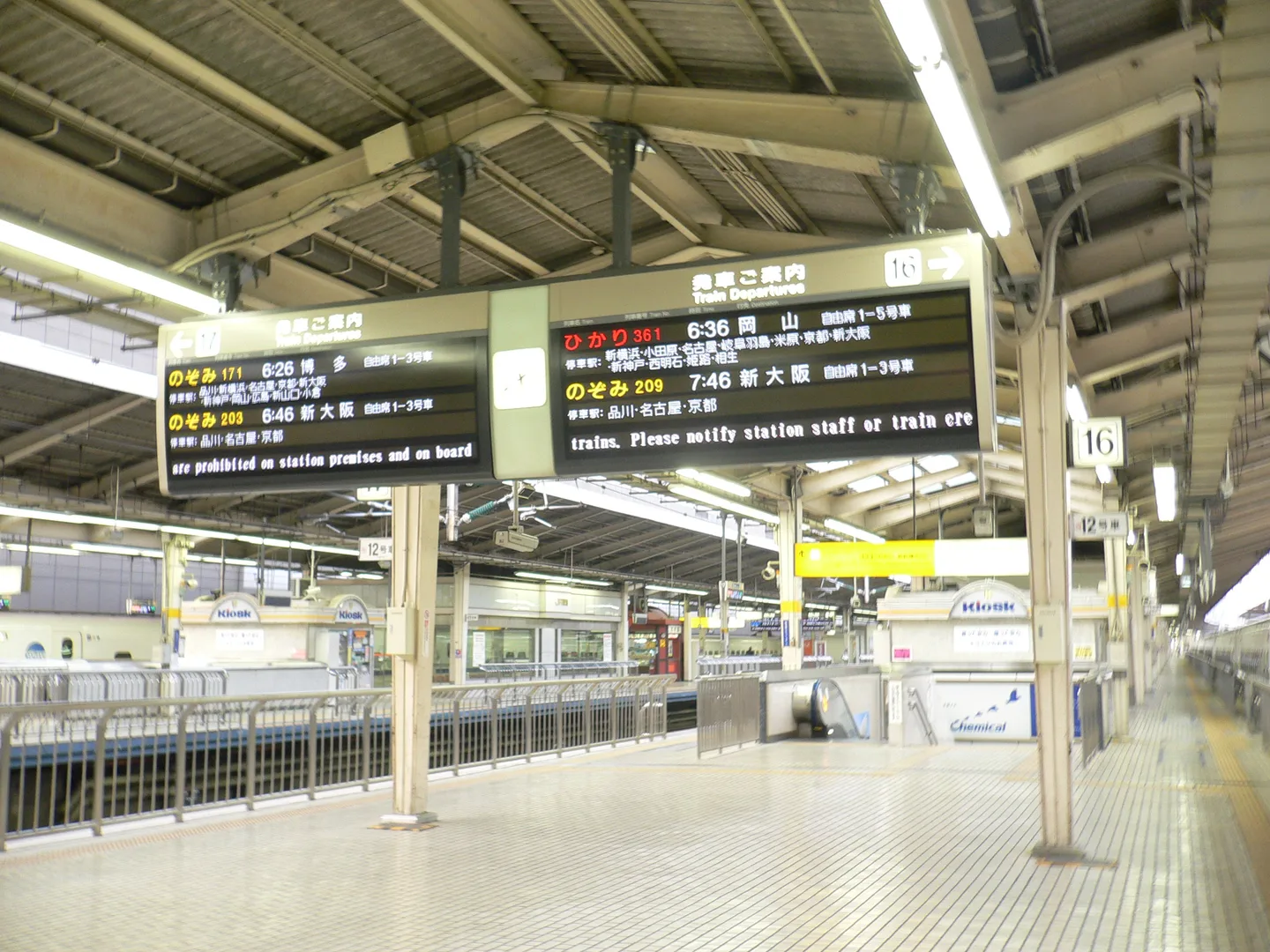
That's about ¥57,700 in shinkansen alone before local trains — so ¥50,000 for unlimited rides is the better buy. One important catch: the base pass covers Hikari, Sakura and Kodama trains for free, but Nozomi and Mizuho (the fastest services) require a paid supplement — for example about ¥4,960 for Tokyo–Shin-Osaka, or ¥4,170 for Shin-Osaka–Hiroshima. If speed matters, budget those supplements on top; if not, the free Hikari/Sakura trains are only slightly slower.
Rule of thumb: the 7-day pass pays off from roughly two long round trips, or one long one-way loop that keeps you moving. Buy the 14- or 21-day only if you're doing a genuinely nationwide, weeks-long trip.
Regional passes that usually win instead
If your trip clusters in one region — which most 5-to-7-day first trips do — a regional pass almost always beats the nationwide one. They're cheaper, cover local trains and often ferries, and several include reserved shinkansen seats within their zone. Official adult prices, as of July 2026:
| Regional pass (official) | Adult price | What it covers |
|---|---|---|
| JR West Kansai Area Pass | 1-day ¥2,800 / 2-day ¥4,800 / 3-day ¥5,800 / 4-day ¥7,000 | Osaka, Kyoto, Kobe, Nara, Himeji, Wakayama + Kansai-airport HARUKA (no shinkansen) |
| JR West Kansai-Hiroshima Area Pass | 5-day ¥17,000 | All of the above plus reserved Sanyo Shinkansen Shin-Osaka⇄Hiroshima + Miyajima ferry |
| JR East JR EAST PASS (Tohoku/Nagano/Niigata) | 5-day ¥35,000 / 10-day ¥50,000 | Greater Tokyo, Sendai, Aomori, Nagano, Niigata incl. those shinkansen (not the Tokaido line) |
Two things to watch. First, coverage is zoned: the Kansai passes do not cover the Tokaido Shinkansen back to Tokyo, and the JR EAST PASS explicitly excludes the Tokaido Shinkansen and the Fujikyu line to Mt. Fuji. Second, note the JR East picture changed in March 2026 — the old separate Tohoku and Nagano/Niigata passes were merged into one ¥35,000 JR EAST PASS. Match the pass zone to where you'll actually be, and it's hard to overpay.
Where to buy: official vs platforms (July 2026 tracked prices)
You can buy the nationwide pass directly from the official JR site in yen, or from a reseller in your own currency. Prices track closely once converted, so the real deciders are billing currency, English support, and whether a coupon is attached.
| Seller | JR Whole Japan Pass (7-day) | Currency | Checked |
|---|---|---|---|
| Official JR Pass site | ¥50,000 | JPY | Jul 2026 |
| Klook | $322.99 | USD | Jul 12, 2026 |
| GetYourGuide | $324.19 | Jun 30, 2026 | USD |
Those are our tracked figures (our tracked data, July 2026). Converted at roughly ¥162 = US$1, the platform prices land just above the official ¥50,000 — a small reseller margin in exchange for USD billing, English-language support, and a single voucher you exchange in Japan. Both sellers issue an exchange order (QR/PDF) that you swap for the physical pass at a JR counter or ticket machine after you arrive. Given the announced October 1 increase, buying before then locks the current price. Whichever route you pick, open the live price card first — that's where any coupon-applied link shows up.
Getting the most from your pass (and what it doesn't cover)
A pass covers JR trains — not everything with a rail. A few gaps trip people up, so here's where to fill them:
- Tokyo's subway isn't JR. The Tokyo Metro and Toei lines that reach most neighborhoods are separate companies — your JR Pass only covers the JR Yamanote loop. A dedicated Tokyo Subway Ticket (24/48/72-hour) is the cheap fix for city days.
- Mt. Fuji's Fujikyu line isn't covered by the JR Pass or the JR EAST PASS. If Kawaguchiko and the Fuji Five Lakes are on your list, a dedicated Fuji-area pass covers the trains, buses and attractions there.
- Seat reservations and live times need data. Reserving Nozomi supplements, checking platform changes and re-routing around delays all happen on your phone — a cheap unlimited eSIM keeps you connected from landing.
The cards below pull live, coupon-applied prices so you can compare in one place: the JR Whole Japan Pass itself, the Tokyo Subway Ticket for city days, the Mt. Fuji area pass, and a Japan eSIM for reservations and navigation.
Compare prices for related tickets



FAQ
Is the JR Pass worth it for Tokyo, Kyoto and Osaka?
Usually not, as of July 2026. A Tokyo–Osaka return on the Nozomi is about ¥29,440, and moving around Kyoto, Nara and Kobe is on cheap local trains — so a typical trip totals around ¥32,000 on single tickets versus ¥50,000 for the 7-day pass. Buy single tickets, or a small Kansai Area Pass for the local days.
Can I use the JR Pass on the Nozomi and Mizuho?
Yes, but only with a paid supplement. Since October 2023 pass holders can ride the fastest Nozomi and Mizuho trains by paying an extra reserved-seat supplement — for example about ¥4,960 for Tokyo–Shin-Osaka. The base pass still covers the slightly slower Hikari, Sakura and Kodama trains for free, which is fine for most routes.
Should I buy the JR Pass before I arrive or in Japan?
Buy before you travel. You purchase an exchange order online (official site or a reseller like Klook or GetYourGuide) and swap it for the physical pass at a JR counter after landing. As of July 2026 the 7-day pass is ¥50,000, with an increase announced from October 1, 2026 — so buying earlier can lock the lower price.
Do regional passes cover the shinkansen?
Some do, within their zone. The Kansai-Hiroshima Area Pass (¥17,000) covers reserved Sanyo Shinkansen seats between Shin-Osaka and Hiroshima, and the JR EAST PASS covers the Tohoku, Nagano and Niigata shinkansen — but none cover the Tokaido Shinkansen between Tokyo and Osaka. The plain Kansai Area Pass covers no shinkansen at all. Always check the zone map before buying.
Sources
- JAPAN RAIL PASS Official — Types and prices (checked July 2026)
- JAPAN RAIL PASS Official — Use of NOZOMI / MIZUHO trains (checked July 2026)
- JR-West — Kansai Area Pass (official prices, checked July 2026)
- JR-West — Kansai-Hiroshima Area Pass (official prices, checked July 2026)
- JR-East — JR EAST PASS (official prices, checked July 2026)