
Mt Fuji & Hakone Day Trip: Owakudani & Lake Ashi from Tokyo
Mt Fuji, Owakudani's steam vents and a Lake Ashi cruise in one day from Tokyo. Compare live prices and coupons.
4.80 · 1,500
Coupons & deals
Partner prices and live coupons in one list.
- Klook
[Limited Offer] Mt. Fuji & Hakone Day Trip (Chinese/English/Japanese Guide)
$64.19Get deal - KlookUse coupon
20% off Europe tours (max ₩20,000)
Copy code: KLKEUTOUR20%
What it is
This guided full-day bus tour from Tokyo covers two of Japan's most iconic destinations in a single day: the Mt. Fuji area (typically the Fuji Subaru Line 5th Station at 2,305 m, weather permitting) and Hakone's volcanic Owakudani valley and Lake Ashi. It's the most popular Tokyo day trip for first-time visitors to Japan who want sweeping views of Mt. Fuji without the complexity of self-navigation.
Highlights
- Mt. Fuji 5th Station (Fuji Subaru Line, ~2,305 m): the highest point accessible by road and bus, with close-up views of the summit and the surrounding Fuji-Hakone-Izu National Park — this stop is weather-dependent and may be swapped for a lower viewpoint
- Owakudani volcanic valley: an active geothermal area in Hakone formed ~3,000 years ago, with sulphur vents, steaming craters, and the famous kuro-tamago (black eggs) slow-boiled in the hot springs — said to add seven years to your life
- Hakone Ropeway: an aerial gondola from Sounzan to Togendai via Owakudani, passing over the steaming valley with unobstructed Mt. Fuji views on clear days
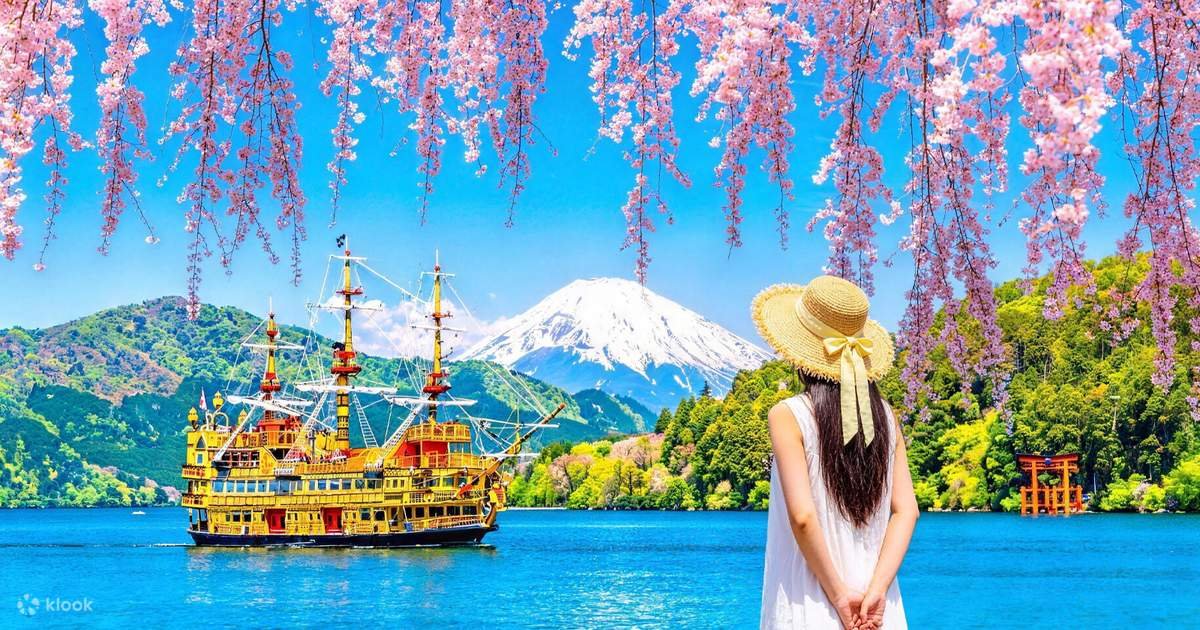
- Lake Ashi (Ashinoko) cruise: a 25-40 minute crossing of the caldera lake aboard a European-warship-style 'pirate ship', with the Hakone Shrine torii gate rising from the water and Mt. Fuji behind on clear days
- Hakone Shrine lakeside torii gate: one of the most photographed spots in Hakone, viewable from the cruise and Moto-Hakone port
Good to know
- Total duration is typically 10-11 hours; tours usually depart the Shinjuku area around 8:00 AM and return to Tokyo in the early evening
- Mt. Fuji 5th Station road access is seasonal — the Fuji Subaru Line is typically open late April to late November; in winter and early spring tours substitute a lower-elevation viewpoint
- Owakudani and the Hakone Ropeway can close at short notice when volcanic alert levels rise; the ropeway also has historic winter maintenance closures (Jan-Feb) with replacement buses — check Hakone Navi close to your date
- Mt. Fuji visibility is never guaranteed; cloud cover is common in the rainy season (mid-June to mid-July) and summer afternoons, so early-morning departures give the best odds
- Most group bus tours include an English-speaking guide, Owakudani and Lake Ashi cruise admission, and the ropeway ride; lunch is included on some tours but not all — confirm at booking
Frequently asked
- Can I visit Owakudani on a day trip from Tokyo in winter?
- Yes, with caveats. Owakudani stays open year-round when volcanic activity is normal, but the Hakone Ropeway has historic Jan-Feb maintenance closures (replacement buses run) and Mt. Fuji 5th Station road access is typically closed late November to late April, so winter tours substitute a lower viewpoint.
- Is Mt. Fuji visible on the Lake Ashi cruise?
- Only on clear days. Mt. Fuji is often hidden by cloud, especially in summer afternoons and the June-July rainy season. Morning tours in autumn (October-November) have the best odds. Operators cannot guarantee visibility.
- Are the Owakudani black eggs (kuro-tamago) safe to eat?
- Yes. They are ordinary hens' eggs boiled in the iron-rich volcanic hot springs, which blackens the shells; they taste like normal hard-boiled eggs and are sold in batches of five at the Owakudani shop when the area is open.